
Bernese Mountain Dogs are easy to love but they are not a low-maintenance breed. They’re big, they shed heavily, they’re sensitive to heat, they have real health risks, and — hardest of all — their lifespan is short. This guide is an honest overview of what living with a Berner actually involves, with links to the detailed guides for each topic.
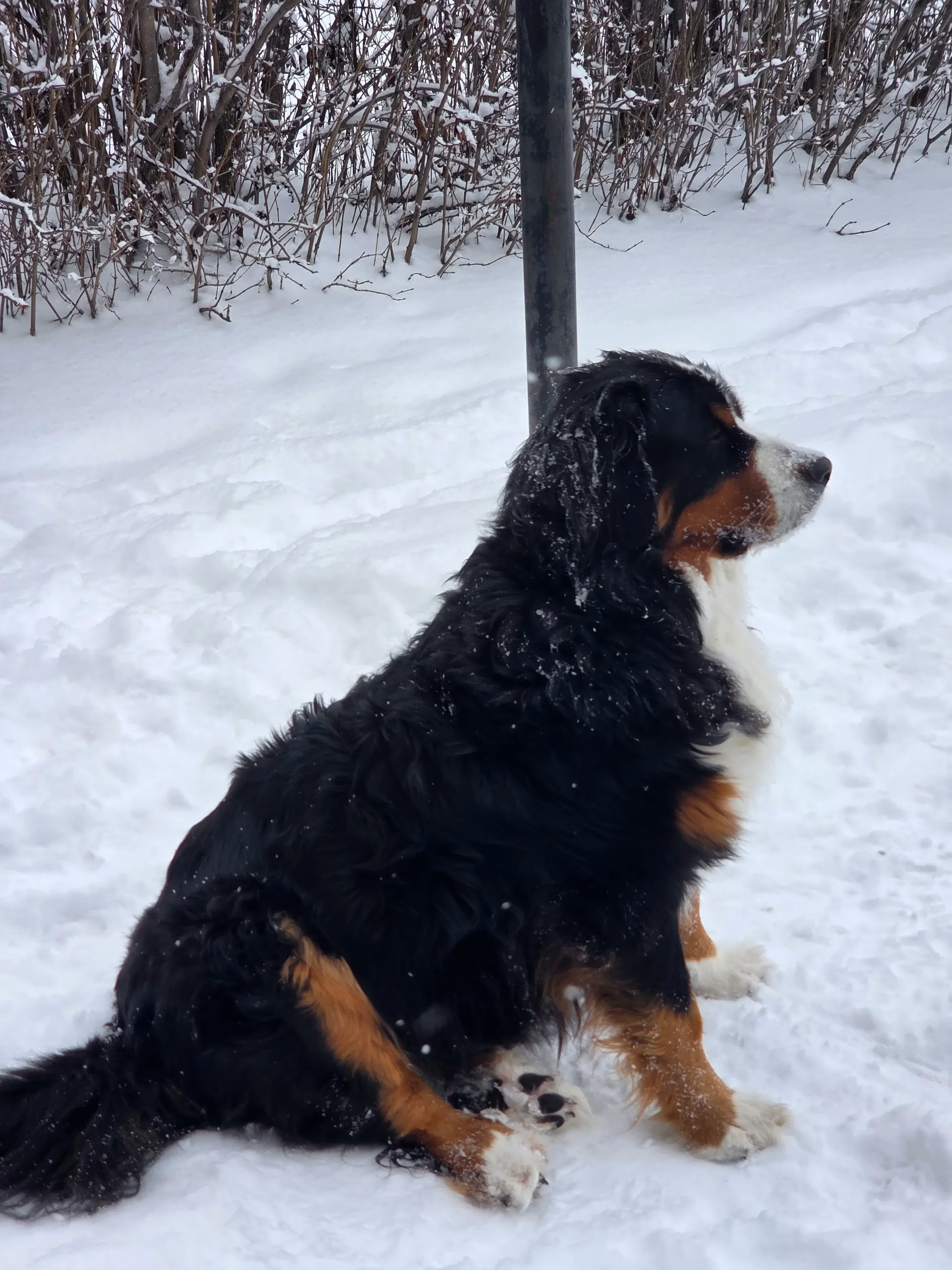
From my own experience: after having Berners since 2011, the thing that still gets me is how completely they bond to their people — mine lose their minds with excitement every time I walk in the door, and it takes a solid five or ten minutes for them to settle. The flip side is real, too: this is not a breed that does well left alone all day. If I had to sum up living with them, it’s big love, big shedding, and a short time that goes by far too fast.
Bernese Mountain Dog at a glance
| Height | Males roughly 25–27.5 in (64–70 cm); females roughly 23–26 in (58–66 cm) |
| Typical adult weight | Males roughly 80–115 lb (36–52 kg); females roughly 70–95 lb (32–43 kg) |
| Coat | Thick double coat, tricolour — black with rust and white markings |
| Shedding | Year-round, plus heavier seasonal coat blows |
| Exercise | About an hour a day for a healthy adult, split across the day |
| Median lifespan | 8.4 years in a followed Swiss birth cohort (Klopfenstein et al., 2016). Females outlived males, 8.8 against 7.7 |
| Leading cause of death | Neoplasia — 58.3% of deaths in that same cohort |
| Growth | Slow. Skeletal maturity takes roughly two years, which is why exercise is restricted well past the point the dog looks grown |
Temperament
The breed is known for being gentle, affectionate, calm, and deeply attached to its family. Berners are typically good with children and other pets, often a little reserved with strangers, and not big barkers. They are companion dogs at heart and don’t do well isolated or left alone for long periods — they want to be where you are.
Size and space
Adults stand 23–27.5 inches at the shoulder and weigh roughly 70–115 pounds. They’re calm indoors but take up room, and they can manage apartment life with committed daily exercise. The bigger living-condition factor is climate. See living conditions.
Exercise
Most adults need about an hour of moderate activity a day, with puppy exercise kept light to protect growing joints, and nothing strenuous in the heat. Details and an age-by-age breakdown are in exercise needs.
Grooming and shedding
That thick double coat needs brushing several times a week, daily during the twice-yearly “coat blows,” and should never be shaved. Expect a lot of fur year-round. See grooming and shedding.
Health and lifespan
This is the hardest part of the breed. Berners are prone to hip and elbow dysplasia, bloat (GDV), and a higher-than-average cancer risk, and their average lifespan is only about 7–10 years. Buying from a health-testing breeder, keeping your dog lean, and staying on top of veterinary care all matter. See health problems, hip dysplasia, bloat/GDV, and lifespan.
Feeding
Feed a complete, balanced diet appropriate for a large breed, watch portions to prevent the joint strain of excess weight, and ask your vet about feeding routine and bloat-risk management. See feeding a Bernese.
Training and daily life
Berners are smart, sensitive, and best trained with early, consistent, positive methods. Socialize widely as a puppy, teach manners before they’re full-grown, and give them daily companionship and enrichment. See training and puppy training.
Reasons a Berner might be the wrong dog for you
Most breed guides are written to sell you on the dog. This one is not. Here are the things that make people regret the decision, stated plainly, so you can decide before there is a puppy in the house.
You will probably lose this dog young. The median in the Swiss cohort was 8.4 years. Plenty of Berners do better, and some do considerably worse. If you are choosing a breed partly on how long you get to keep it, this is not the breed.
Cancer is the likeliest ending. Neoplasia accounted for 58.3% of deaths in that dataset. Good breeding and good care improve the odds; nothing removes them.
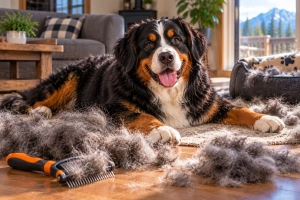
The hair is not an exaggeration. Constant shedding, plus heavy seasonal blows where you will pull out enough undercoat to fill a bag. If hair on your clothes, floors and car is something you would resent, resent it now rather than later.
Heat is a real constraint. A heavy double coat is superb in a cold climate and a genuine limitation in a hot one. In a hot summer your walks move to dawn and dusk, and some days they do not happen at all.
Everything costs more at 100 pounds. Food, flea and worm treatment, joint supplements, boarding, and most significantly veterinary care — a great deal of which is dosed or priced by body weight. A large-dog emergency is a large-dog bill.
They do not do well left alone. Berners bond hard and closely. A house that is empty ten hours a day, five days a week, is a poor fit for this breed and a reliable route to separation anxiety.
The growth period is long and restrictive. You are managing stairs, jumping and exercise load for roughly two years, in a dog that will look fully grown long before its joints are.
None of that is a reason nobody should own one. It is a reason to go in with your eyes open — which, if you have read this far, you are doing.
Is a Bernese Mountain Dog right for you?
A Berner suits someone who is home often, can handle heavy shedding, lives in or can manage a cool environment, can give daily exercise and companionship, and is prepared — emotionally and financially — for the breed’s health risks and short lifespan. For the right owner, they’re among the most loving dogs you can share a home with.
