
This post may contain affiliate links. If you buy through these links, we may earn a small commission at no extra cost to you. As an Amazon Associate, I earn from qualifying purchases.
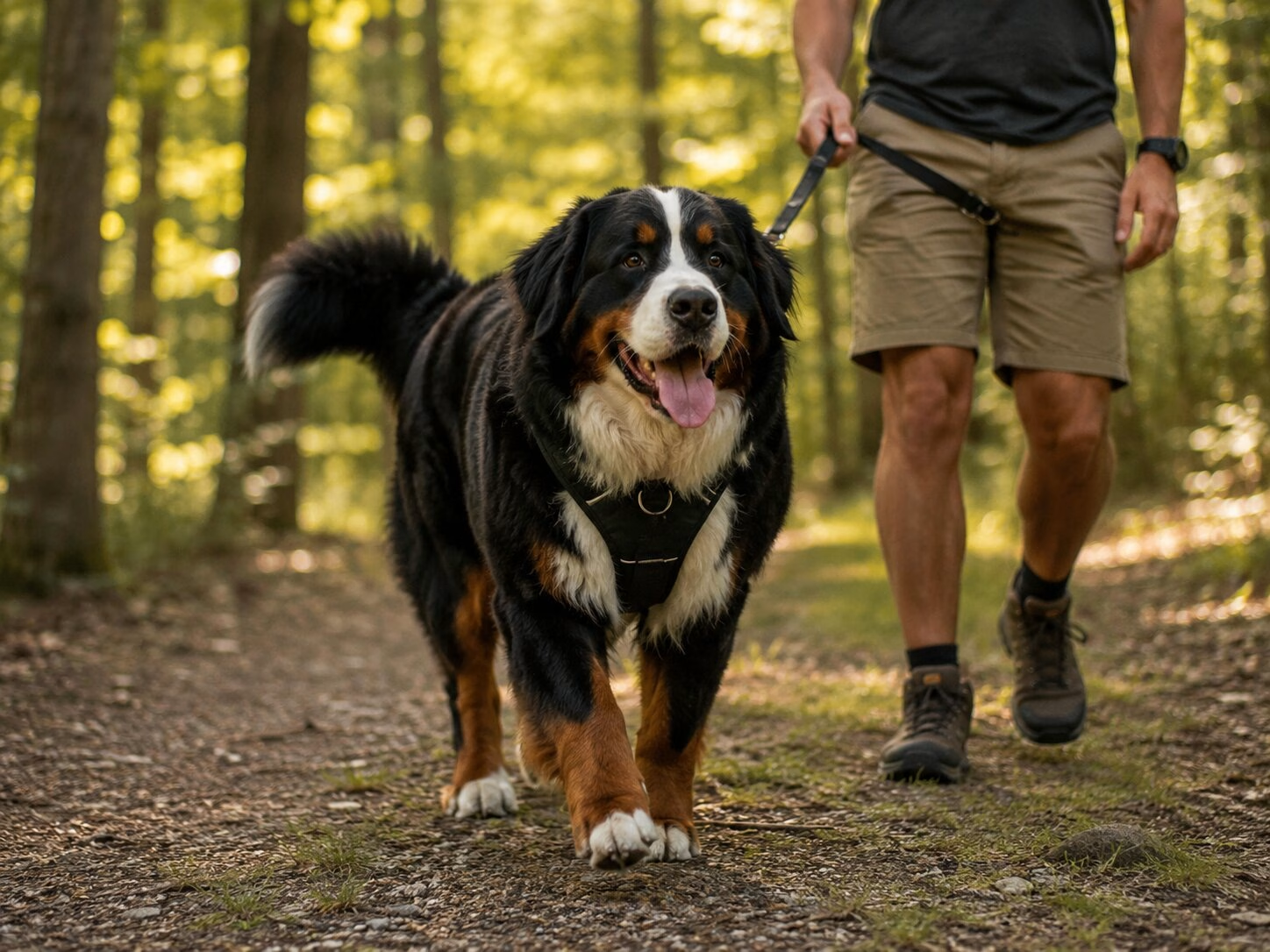
If you’ve ever walked a Bernese Mountain Dog, you already know the problem. A hundred-pound dog that decides to go left while you’re going right isn’t a small inconvenience — it’s a serious arm workout. Finding a harness that fits a broad-chested, strong giant breed takes careful measurement and more scrutiny than simply choosing the largest size on the shelf.
Most harnesses are designed with medium-sized dogs in mind. Even the ones labeled “XL” often assume a narrower chest or lighter weight. Bernese Mountain Dogs are big, broad, and strong. They need a harness that’s actually built for their body — not just a scaled-up version of a Labrador harness.
This guide compares Bernese Mountain Dog harnesses using published sizing, construction details, safety features, and large-dog owner feedback. Unless a product is specifically identified as personally used, it has not been personally tested by BerneseMountainLover.com.
Quick Comparison: Best Harnesses for Bernese Mountain Dogs
| Product | Best For | Size Fit | Key Feature | Check Price |
|---|---|---|---|---|
| rabbitgoo No Pull Harness | Best Overall | XL fits up to ~100 lbs | Dual clip, soft padded, 194K+ reviews | View on Amazon |
| Carhartt Nylon Duck Harness | Best Premium / Durable | XL up to 100 lbs | Duck cloth, quick handle, all-weather | View on Amazon |
| 2 Hounds Design Freedom Harness | Best for Pullers | 1″ XL fits most adult Berners | Front & back clip, Made in USA, escape-resistant | View on Amazon |
| Embark Adventure XL Harness | Best Budget-Friendly | XL, fits large breeds | Gel-lined handle, military nylon, reflective | View on Amazon |
| rabbitgoo Tactical Harness | Best for Training | XL tactical fit | MOLLE system, top handle, heavy-duty nylon | View on Amazon |
What to Look for in the Best Harness for Bernese Mountain Dogs
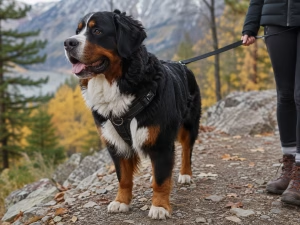
Buying a harness for a Bernese isn’t like buying one for a golden retriever or a husky. This breed has some very specific physical characteristics that affect what will actually fit and work well.
Chest Girth and Adjustability
Adult Bernese Mountain Dogs typically have a chest girth between 28 and 36 inches, with some larger males pushing past 38 inches. Any harness you buy needs to have enough adjustability to accommodate that range. Always measure your dog’s chest girth — the widest point behind the front legs — before purchasing.
A harness that fits a 70-pound Lab often won’t fit a 90-pound Berner, even if both are labeled XL. Chest width and body depth matter as much as weight.
No-Pull Design: Front Clip vs. Back Clip
If your Berner pulls on leash — and let’s be honest, most do — you’ll want a harness with a front clip. Attaching the leash to a ring on the chest redirects the dog toward you when they pull forward, which naturally slows pulling. Back clips are comfortable for dogs that already walk well on leash, but they offer almost no pull resistance.
Dual-clip harnesses with both front and back D-rings give you the most flexibility. Use the front clip when walking, the back clip when running or hiking.
Handle Placement
A top handle on a Berner harness isn’t optional — it’s a safety feature. When you need to quickly control a 100-pound dog in a parking lot, near traffic, or around other dogs, being able to grab the handle makes a real difference. Make sure the handle is solidly attached and padded. Cheap handles with weak stitching can fail exactly when you need them most.
Buckle Strength and Stitching Quality
Plastic buckles are fine for small dogs, but Berners put real stress on hardware. Look for reinforced metal D-rings for leash attachment, and check reviews for any mentions of buckles snapping or stitching coming apart. This breed is strong — buy a harness rated for their weight, not just close to it.
Padding and Pressure Points
Wide, padded straps distribute pressure more evenly across the chest and body. Thin straps can dig in behind the front legs or across the chest during long walks. For a breed prone to joint issues, comfort during exercise matters — especially if your Berner is already managing any elbow or shoulder stiffness.
Puppy vs. Adult Sizing
Berner puppies grow incredibly fast. Many Berner owners buy a medium harness at 3 months and need an XL by 6 months. For puppies, look for highly adjustable harnesses with a wide range, or plan to size up multiple times. Don’t invest heavily in a puppy harness — your money is better spent on a great adult harness when they’ve hit their full size around 18-24 months.
Bernese Mountain Dog Harness Comparison
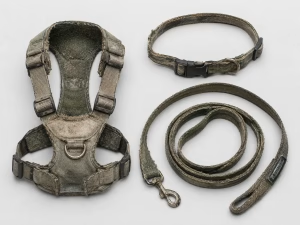
1. rabbitgoo No Pull Dog Harness XL — Best Overall
Best for: Most Bernese Mountain Dog owners looking for a reliable, well-priced everyday harness
This is a widely reviewed large-dog harness, but BerneseMountainLover.com has not personally tested it. Its useful features include broad adjustability, front and back leash clips, padding, and reflective stitching. Confirm the current specifications, price, and recent owner feedback before buying.
The XL size fits chest girths from approximately 27 to 40 inches, which works for most adult Berners. It has both a front clip (for no-pull walking) and a back clip (for casual walks or runs), a padded chest plate, reflective stitching, and an easy-on design with four adjustment points.
Pros: Affordable, widely available, excellent fit for broad-chested dogs, Amazon’s Choice badge, dual leash clips
Cons: Not as heavy-duty as some tactical options, some reports of stitching loosening after heavy use
Sizing notes: Select XL for most adult Berners (27–40″ chest girth). Measure your dog first.
Who should buy it: Owners who want a proven, affordable everyday harness for a large breed
Who should skip it: Owners who need maximum durability for a very powerful dog that has already destroyed harnesses
2. Carhartt Nylon Duck No Pull Dog Harness — Best Premium Pick
Best for: Owners who want a durable, all-weather harness built to last
Carhartt makes workwear that lasts, and their dog harness carries that same philosophy. Built from 500-denier polyester with Carhartt’s Rain Defender DWR water-repellent treatment, this harness holds up to dirt, rain, and hard use. At $49.97 in XL, it’s a premium buy, but the build quality justifies it for active dogs and outdoor enthusiasts.
The quick-control handle is reinforced and positioned well. The reflective trim adds nighttime visibility. Sizing covers up to 100 lbs in XL. Check the current chest-girth dimensions carefully; some larger Berners may need a different size or model.
Pros: Premium materials, water-resistant, sturdy hardware, excellent handle, Carhartt build quality
Cons: Pricier, limited color options, may be tight on the widest-chested Berners
Sizing notes: XL rated to approximately 100 lbs. Check Carhartt’s chest girth chart before buying.
Who should buy it: Outdoor enthusiasts, hikers, or owners who want a harness that survives mud, rain, and rough terrain
Who should skip it: Budget shoppers or those with Berners over 100 lbs
3. 2 Hounds Design Freedom No Pull Harness — Best for Serious Pullers
Best for: Berners who pull hard and owners who’ve struggled with other no-pull harnesses
The Freedom Harness from 2 Hounds Design is a serious no-pull tool. Made in the USA, this harness uses a unique two-point system (front clip on the chest, back clip behind the shoulders) that works in tandem with a double-ended leash for maximum steering control. The velvet-lined chest plate sits wide and padded.
The 1″ webbing XL size handles up to 120 lbs and fits chest girths from approximately 27 to 38 inches. If your Berner is a strong, determined puller and other harnesses haven’t worked, this is the step up.
Pros: Made in USA, excellent no-pull design, padded chest, wide weight range, long-term durability
Cons: Works best with a double-ended leash (sold separately), velvet lining may attract Berner fur, slightly higher price point
Sizing notes: 1″ XL fits approximately 27–38″ chest and up to 120 lbs
Who should buy it: Berner owners dealing with serious pulling who want a thoughtfully engineered solution
Who should skip it: Casual walkers with a well-trained dog who don’t need aggressive no-pull features
4. Embark Adventure XL Dog Harness — Best Budget Option
Best for: Cost-conscious owners who still want a solid, well-reviewed harness
The Embark Adventure harness offers military-grade nylon construction, a gel-lined top handle, dual leash clips, and reflective trim — all for around $34.99. That’s a lot of harness for the price. With over 10,000 ratings at 4.6 stars, this is one of the more underrated harnesses for large breeds. It’s designed specifically with extra-large dogs in mind.
Pros: Affordable, strong military nylon, comfortable gel handle, 10K+ 5-star reviews, reflective
Cons: Smaller brand, less sizing information publicly available — confirm XL chest girth range before purchasing
Sizing notes: XL size. Confirm fit against current Amazon sizing chart.
Who should buy it: Owners wanting a budget-friendly but quality option with strong ratings
Who should skip it: Owners who need guaranteed sizing for a very large or unusual-shaped Berner
5. rabbitgoo Tactical Dog Harness — Best for Training and Control
Best for: Owners doing obedience training or who want a high-control harness for confident handling
The rabbitgoo Tactical takes the brand’s no-pull design and adds military-style molle webbing, a heavy-duty top handle, and metal hardware. It’s available in XL and rated for large breeds. At around $27–$42 depending on the variant, it falls between budget and premium. The MOLLE panels let you attach pouches or ID patches if needed.
Pros: Great control handle, metal hardware, tactical design, durable, well-reviewed
Cons: Slightly heavier than standard harnesses, tactical look isn’t for everyone
Sizing notes: Available in XL. Verify chest girth range before ordering.
Who should buy it: Owners who want a control-oriented harness or do formal training work
Who should skip it: Owners who want a simple, lightweight everyday harness
Harness Safety and Fit Tips for Berners
No matter which harness you choose, measure your dog before ordering. Chest girth — the circumference around the widest part of the chest, just behind the front legs — is the most important measurement for harness fit. Weight alone doesn’t determine size; a lean 80-pound Berner can have a completely different chest girth than a stockier 80-pound dog.
Check the fit after the harness arrives. You should be able to fit two fingers under each strap. If a strap is pressing into the armpit area or causing rubbing behind the front legs, the harness is either too tight or the wrong shape for your dog. Watch for any hair loss or skin irritation in contact zones.
For puppies, don’t buy a harness expecting to grow into it. A harness that fits poorly can put uneven pressure on a growing puppy’s joints and chest. Size correctly for their current measurements and plan to replace it as they grow.
For any large dog that pulls, the leash should attach to a well-fitted harness rather than a flat collar — pulling against a collar concentrates force on the throat and neck. A front-clip harness, which gently turns the dog toward you when it pulls, is the most useful setup for a strong Berner that’s still learning. The collar still earns its keep holding ID tags; see our guides to Bernese harnesses and collars.
Choosing the leash itself
- Standard 4–6 ft leash. The everyday workhorse. Choose strong webbing or leather rated for large dogs, with solid stitching and a sturdy clasp.
- Width and grip. A slightly wider leash with a padded handle is far more comfortable when controlling a 90+ lb dog.
- Hands-free/waist leashes. Useful for walks and jogs once your dog walks politely — not ideal for a dog still pulling hard.
- Skip retractable leashes for a strong, untrained Berner. They teach pulling, offer little control, and can fail or cause injury under a big dog’s force.
Loose-leash walking basics
Gear helps, but training is what fixes pulling. A few principles that work with this smart, food-motivated breed:
- Reward position. Mark and treat your dog for walking near you with a loose leash.
- Stop when they pull. Stand still or change direction so pulling never gets them where they want to go.
- Start early and low-distraction. Practice in the yard or a quiet street before busy areas, and keep sessions short.
- Be consistent. Everyone who walks the dog should use the same rules.
Start this work in puppyhood if you can — it’s far easier to prevent pulling than to undo it once a dog is full-grown and powerful.
Choosing a collar for a Bernese Mountain Dog is more of a safety decision than a style one. A Berner is a large, strong, deep-chested dog, often with a head that’s smaller in proportion to a thick, muscular neck — a combination that affects both fit and what kind of pressure the neck can safely take. This guide covers how to size a collar, which styles suit the breed, and when a harness is the better choice.
When a large dog pulls against a flat collar, the force concentrates on the trachea, the cervical spine, and the thyroid area. On a 90–115 lb dog that can generate well over 100 lb of pulling force, that pressure is significant, which is why most veterinarians and trainers recommend attaching the leash to a harness rather than a collar for any large dog that pulls. A collar still has an important job — holding ID tags and serving as everyday neckwear — but it shouldn’t be the primary leash-attachment point for a Berner who hasn’t mastered loose-leash walking.
Getting the fit right
A good fit is the foundation of collar safety.
- Measure correctly. Use a soft tape to measure the base of the neck where the collar naturally sits — not where the head is widest. Pull it snug but not tight.
- Use the two-finger rule. You should be able to slide two fingers between the collar and the neck. If you can’t, it’s too tight; if a full hand fits, it’s too loose and can slip over the head.
- Choose a width to match the dog. A 1.5–2 inch width distributes pressure better than a thin strap on a big neck.
Typical neck measurements: puppies (2–6 months) around 12–16 inches; adolescents (6–18 months) 16–22 inches; adult females 18–24 inches; adult males 20–26 inches. These run larger than the “large” size on most packaging, so go by the actual measurement rather than the label, and re-measure a growing puppy every two to three months.
Collar styles for Bernese Mountain Dogs
Flat buckle or snap collar. The standard everyday collar — good for ID tags and for trained dogs that walk on a loose leash. Not the right primary attachment for a dog that pulls.
Martingale collar. Often the best all-round choice for Berners. It tightens slightly and evenly when the dog pulls, then releases — preventing the collar from slipping over a broad head without the choking action of a slip collar. Fit it so it can only tighten to the size of the neck, never the head.
Head halter (Gentle Leader, Halti). Fits over the muzzle and behind the head and discourages pulling by steering the head. Useful for strong pullers and training, but it must be introduced slowly and positively, and it’s not for everyday unsupervised wear.
Front-clip harness (e.g., Easy Walk, Ruffwear Front Range). Clips at the chest and turns the dog gently toward you when it pulls, taking pressure off the neck entirely. The best option for walking a Berner that pulls. A harness isn’t a substitute for a collar with ID tags, though — the dog should wear both.
Not recommended: prong/pinch collars and slip/choke chains. The breed’s sensitivity to physical corrections plus the neck-pressure concerns above make these counterproductive and potentially harmful.
Paw care is the real winter issue
For a coated breed like the Berner, paws need more winter attention than the body does. Road salt and chemical can irritate and crack paw pads, and ice balls form between the toes on long-haired feet.
- Trim the hair between the paw pads to reduce ice buildup.
- Wipe or rinse paws after walks to remove salt (which is also harmful if licked off).
- A paw balm or wax adds a protective layer before walks.
- Dog boots help on heavily salted sidewalks, if your dog will tolerate them — introduce them gradually.
Which winter accessories are worth it
Berners rarely need a coat — their own coat does the job, and a jacket can even cause overheating during active play. Save outerwear for puppies, seniors, short-coated individuals, or long periods of standing around in extreme cold. The accessories that genuinely earn their place for most Berners are paw protection (balm or boots), a quick-dry towel for snowy returns, and good traction at home for slippery floors. Reflective or light-up gear is worth it for the long dark evenings of winter.
Indoor winter care
Indoor heating dries out skin and coat, so keep up regular brushing and make sure water stays fresh and unfrozen if any is kept outside. Give your Berner a draft-free, supportive bed off cold floors. And keep exercising — winter is when many Berners feel their best, so daily walks and snow play are great for body and mind.
Final Recommendations
For most Bernese Mountain Dog owners, the rabbitgoo No Pull Harness in XL is the best starting point — it is widely reviewed, relatively affordable, and available in a size range that may fit many Berners. If you need durability and plan to be in the outdoors frequently, step up to the Carhartt Nylon Duck Harness. For serious pullers who’ve gone through other options, the 2 Hounds Design Freedom Harness is the most engineered solution for the problem.
FAQ: Best Bernese Mountain Dog Harnesses
What size harness does a Bernese Mountain Dog need?
Most adult Berners need an XL harness, but always measure chest girth rather than relying on weight or size labels alone. Adult Berners typically have a chest girth between 28 and 38 inches, with variation by sex and individual build.
Is a no-pull harness safe for Bernese Mountain Dogs?
Yes, when properly fitted. A front-clip no-pull harness is much safer than a choke collar or prong collar for a large breed like a Berner. The key is that it fits correctly — too tight causes pressure issues, too loose allows escape.
Can Bernese Mountain Dogs escape from harnesses?
Yes, some Berners are escape artists. If your dog backs out of harnesses, look for designs with martingale or locking features, or consider the 2 Hounds Design Freedom Harness, which uses a dual-point system that’s much harder to back out of.
What’s the best harness for a Bernese Mountain Dog puppy?
Buy a harness rated for your puppy’s current measurements, not the size you expect them to reach. Berners grow fast — you may need to size up every couple of months until they’re fully grown at around 18–24 months. Don’t invest in an expensive puppy harness; save your budget for a great adult harness.
Should I use a front clip or back clip on my Berner?
Front clip for training and managing pulling; back clip for relaxed walks or runs once your Berner’s leash manners are solid. A dual-clip harness gives you both options.
