

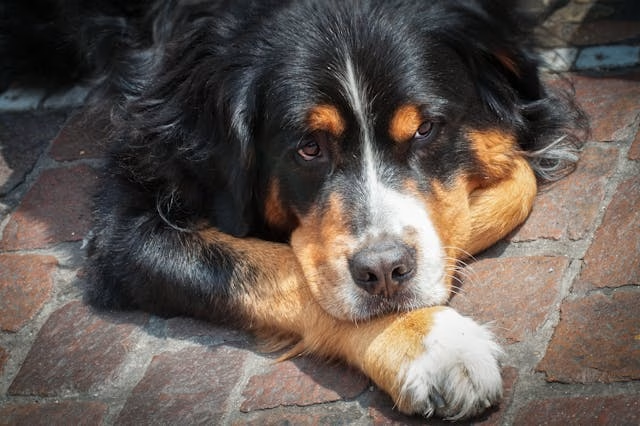
This article is for general Bernese Mountain Dog owner education only and is not veterinary advice. Bernese Mountain Dogs are prone to serious conditions including bloat/GDV, cancer, hip and elbow dysplasia, and heart issues. Always contact a licensed veterinarian for diagnosis, treatment, diet changes, supplements, or emergency symptoms.
Disclosure: This post mentions some products and contains occasional affiliate links; if you buy through them we may earn a small commission at no extra cost to you. See our affiliate disclosure. We are not paid to recommend any brand. Last reviewed: 2026.
Choosing food for a Bernese Mountain Dog is one of the decisions owners agonize over most, and it’s easy to feel lost in front of a wall of bags. The good news: you don’t need a “perfect” food. You need a complete, balanced, large-breed–appropriate diet, fed in the right amount, with a couple of Berner-specific concerns kept in mind. This guide walks through what actually matters — life-stage needs (puppy through senior), reading labels, bloat-aware feeding, and how to talk to your vet — without hype.
I’m Todd, and I feed Bernese Mountain Dogs (Scarlett, Reba, and Indy) at home. Nothing here replaces your veterinarian’s advice for your individual dog. If you’re considering a diet change, especially for a puppy or a dog with a health condition, run it past your vet first.

Bernese-Specific Feeding Concerns
Bernese Mountain Dogs are a large, deep-chested breed with above-average rates of hip and elbow dysplasia, cancer, and bloat/GDV. Diet won’t prevent these conditions, but a few nutritional choices reasonably support joint and weight health and reduce some risk factors:
- Controlled growth in puppies via a large-breed puppy formula with appropriate calcium and phosphorus (more below).
- Lean body condition for life — keeping a Berner at a healthy weight is one of the most effective, best-supported ways to reduce stress on vulnerable joints.
- Joint-supportive nutrients (omega-3 EPA/DHA, and often glucosamine/chondroitin) discussed with your vet.
- Bloat-aware feeding routines (smaller meals, calm eating), covered in the bloat section below.
Also read: Bernese Mountain Dog weight management.
Large-Breed Nutrition Basics
A few label-reading habits go a long way:
- Named animal protein early in the list (e.g., chicken, chicken meal, salmon, beef) rather than vague “meat by-products.”
- An AAFCO statement confirming the food is complete and balanced for your dog’s life stage.
- Ingredient list vs. guaranteed analysis: ingredients are listed by pre-cooking weight, so “chicken meal” is often a more concentrated protein than fresh “chicken.” The guaranteed analysis gives a clearer nutrient picture.
- Skip the extras that add little: artificial colors and BHA/BHT preservatives aren’t necessary in a quality food.
Reputable large-breed formulas from manufacturers that employ board-certified veterinary nutritionists and publish feeding research — brands commonly cited by vets include Purina Pro Plan, Hill’s Science Diet, and Royal Canin large/giant-breed lines — are a sensible default. These aren’t the only good options, and the “best” food is ultimately the balanced one your individual dog does well on. Ask your vet what fits your Berner.
Life-Stage Feeding
Puppies (0–18 months). This is the most important window for preventing developmental orthopedic problems. Feed a large-breed puppy formula (not generic puppy or unqualified “all life stages”), keep calcium in roughly the 0.7–1.2% range, and avoid overfeeding — keeping a Berner puppy lean during growth (visible waist, easily felt ribs) is associated with lower hip dysplasia risk than letting them grow heavy and fast.
Adults (18 months–6 years). Move to a large-breed adult formula, prioritize lean body condition, and feed two meals a day. Many Berners need a 10–15% calorie reduction after spay/neuter to avoid weight gain.
Seniors (7+ years). Healthy seniors still need adequate protein to hold muscle — the old “low protein for seniors” idea has largely been set aside. Continue joint support. Only restrict phosphorus if your vet diagnoses kidney disease.
Feeding a Bernese Puppy: Controlled Growth
Because Berner puppies are slow-maturing and heavy-boned, puppy feeding deserves its own attention. A Bernese puppy looks sturdy and hungry all the time, so it’s tempting to reach for extra-rich food or oversized portions — this breed benefits from the opposite. The goal is steady, controlled growth, not a bigger, faster-growing puppy. A few breed-specific points:
- Calcium caution. Large-breed puppies don’t regulate calcium absorption as efficiently as adults, so too much calcium can contribute to abnormal bone development. If you feed a complete large-breed puppy food, do not add calcium powders, bone meal, or heavy dairy — supplement only if your veterinarian specifically directs it.
- Protein without extremes. Enough quality animal protein to build muscle, but very high-calorie “performance” formulas can backfire by driving too-fast weight gain. A strong puppy should feel solid, not soft and heavy.
- Feeding schedule by age. Young puppies usually do best on three meals a day, which supports digestion, steady energy, and house-training routines. Many Berners move to two meals around six months, though some do fine on three a little longer. Avoid free-feeding — scheduled meals make it easier to monitor appetite, manage weight, and support calm, bloat-aware eating.
- Watch body condition, not the bag. Use the packaging feeding guide as a starting point, then keep a visible waist from above, a slight tuck from the side, and ribs easy to feel under a light layer of fat. Trimming portions slightly is safer than assuming a heavy puppy will “grow into it” — extra weight strains developing joints and can worsen future orthopedic issues.
Adult Weight and Portion Caution
Most adult Berners (roughly 70–115 lb) eat about 4–6 cups of standard-density kibble per day, split into two meals — but this varies a lot by food and individual metabolism. Use the packaging feeding guide as a starting point and adjust to your dog’s body condition, not to a fixed number. If you can’t feel the ribs, cut back and check with your vet.
Bloat / GDV Feeding Safety
Gastric Dilatation-Volvulus (bloat) is a life-threatening emergency that deep-chested breeds like the Berner are at higher risk for. It can be fatal within hours, so learn the signs and keep an emergency vet number handy (see our bloat/GDV guide). Reasonable, commonly advised feeding precautions:
- Feed two smaller meals rather than one large one.
- Avoid hard exercise roughly an hour before and two hours after eating.
- Keep meals calm; discourage frantic gulping of food or water.
- Ensure fresh water is always available.
Many veterinary surgeons discuss a prophylactic gastropexy (stomach tacking) for high-risk breeds, often at spay/neuter. It doesn’t prevent bloat but prevents the fatal stomach rotation — a worthwhile conversation to have with your vet.
Kibble, Fresh-Cooked, and Raw
Kibble: the most practical complete option for most owners. Look for AAFCO-complete formulas from manufacturers with published nutritional research.
Commercial fresh/gently cooked (e.g., delivery services): AAFCO-complete, often more palatable and digestible, but noticeably more expensive.
Raw: the AVMA and most veterinary nutritionists advise caution due to bacterial contamination and the difficulty of balancing homemade diets. If you go this route, choose commercial products formulated to AAFCO standards and involve a veterinary nutritionist.
Transitioning Foods
Switch gradually over 7–10 days, starting at about 25% new food to 75% old and increasing slowly, to avoid stomach upset. Signs the diet is working: a soft coat, small firm stools, steady energy, healthy skin, and a maintained lean weight. A sudden loss of appetite in a dog that previously ate well warrants a vet check rather than just a food change.
Frequently Asked Questions
Should my Berner eat grain-free? The FDA has been investigating a possible link between some grain-free diets (especially those high in legumes) and dilated cardiomyopathy (DCM). Causation isn’t proven, but many vets currently advise caution, particularly for breeds prone to cardiac issues. Unless your dog has a diagnosed grain allergy, a quality grain-inclusive diet is a reasonable default — confirm with your vet.
What supplements might my Berner need? Commonly discussed options are fish oil (omega-3 EPA/DHA) and glucosamine/chondroitin if not already adequate in the food. Dosing and suitability should be confirmed by your veterinarian, especially alongside any medications.
My Berner is a picky eater — what helps? Warm the food slightly, add a spoonful of plain canned pumpkin or a splash of low-sodium broth, and keep to a routine. Sudden pickiness in a previously good eater is worth a vet visit, since it can signal a health issue.
Owner-written, not veterinary advice. This article is written by a Bernese Mountain Dog owner, not a veterinarian. It is general information gathered from veterinary and breed-club sources — not a diagnosis or a treatment plan. Every dog is different. If your dog is unwell or showing any sign described here, call your own vet. In an emergency, go straight in.
How we research this / Sources
- American Kennel Club — Best Dog Food for Large Breeds
- American Kennel Club — Bloat (GDV) in Dogs
- American Kennel Club — Bernese Mountain Dog breed information
Written by Todd Grasse, a Bernese Mountain Dog owner and founder of Bernese Mountain Lover. Todd writes from real owner experience with Scarlett, Reba, and Indy, combining practical Bernese ownership lessons with reputable veterinary and breed-health sources. This is general education, not veterinary advice.
