

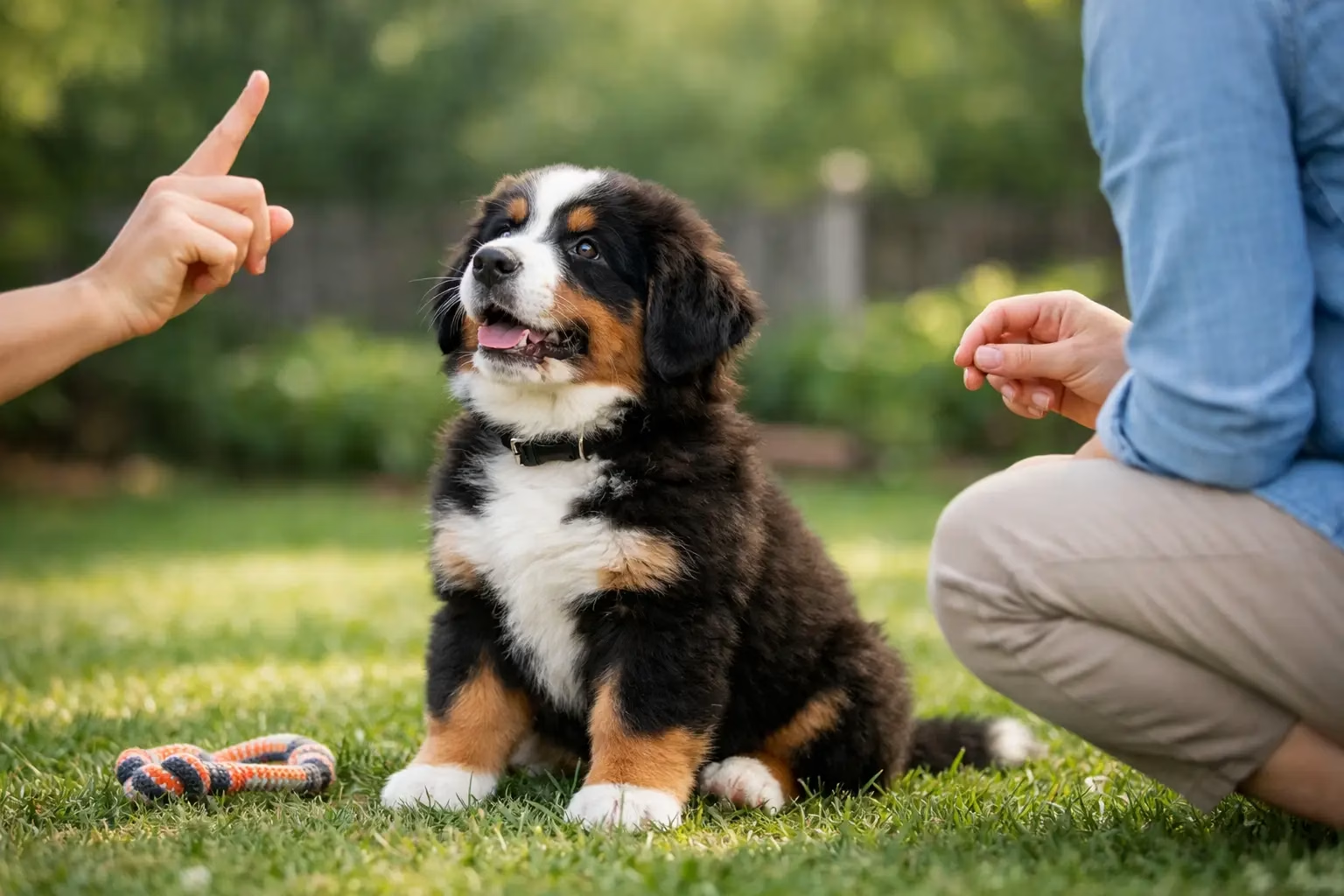
The first week with a Bernese puppy can feel deceptively easy. They are fluffy, sweet-faced, and often so gentle that owners assume training can wait. It should not. If you are wondering how to train a Bernese Mountain Dog puppy, the real goal is not just getting a cute puppy to listen. It is shaping a future giant breed dog who is safe, confident, calm in the house, and pleasant to live with when he weighs well over 80 pounds.
Bernese Mountain Dogs are famously affectionate and eager to be near their people. That works in your favor during training. They usually want connection, praise, and clear direction. At the same time, they mature slowly, can be sensitive to harsh correction, and may become stubborn or unruly if early lessons are inconsistent. A behavior that seems minor at 12 weeks, like jumping, pulling, or mouthing, can become a serious problem fast with this breed.
How to train a Bernese Mountain Dog puppy the right way
The best approach is calm, repetitive, and reward-based. Berners tend to respond beautifully to gentle structure. They do not usually thrive under loud, forceful handling, and many will shut down if training feels intimidating. You want your puppy to think learning with you is safe and worthwhile.
That means keeping sessions short, using food rewards or praise, and practicing the same skills in everyday life instead of only in formal training moments. A Bernese puppy learns fastest when the lesson is clear and the outcome is consistent. If jumping gets attention sometimes but not others, or if leash pulling occasionally gets him where he wants to go, the habit sticks.
Your first priority is not advanced obedience. It is teaching your puppy how to live well in your home and world. Start with potty training, crate comfort, handling, bite inhibition, name recognition, recall, and polite leash behavior. Those basics matter more than flashy tricks for a large breed that will soon have significant size and strength.
Start training from day one
A lot of owners wait until the puppy settles in. With a Bernese, settling in should include training. The first day home is when your puppy begins learning what earns attention, where to sleep, where to potty, and how to interact with people.
Keep the environment simple. Limit free roaming, supervise closely, and create a routine for meals, potty breaks, naps, and quiet time. Predictability helps Bernese puppies feel secure, and secure puppies learn better. It also reduces accidents and overwhelm.
Crate training is especially helpful here, not as punishment, but as a rest space and management tool. Bernese puppies can get overstimulated and mouthy when overtired. A crate or puppy pen gives them a safe place to reset. Many behavior problems in young puppies are really a mix of fatigue, too much freedom, and unclear expectations.
Potty training a Bernese puppy
Because Bernese Mountain Dogs grow quickly, some owners assume house training should come quickly too. Sometimes it does, but bladder control is still age-dependent. Take your puppy out after waking, after eating, after play, and at regular intervals throughout the day.
When your puppy potties outside, reward immediately. Be warm and enthusiastic. When accidents happen indoors, clean them thoroughly and tighten supervision. Scolding after the fact does not teach the right lesson. It often just teaches your puppy to hide.
Teaching bite inhibition and manners
Bernese puppies are usually gentle by nature, but puppies still nip. They explore with their mouths, especially during play and teething. Do not ignore it just because the puppy seems sweet. A large-breed dog needs a very soft mouth and good impulse control.
If your puppy bites hands or clothing, calmly end the interaction and redirect to an appropriate toy. If biting ramps up during excitement, your puppy may need a nap more than another correction. This is common in young Berners. They can go from cuddly to chaotic when overtired.
Socialization matters more than most owners realize
One of the most important parts of learning how to train a Bernese Mountain Dog puppy is understanding that obedience alone is not enough. Socialization is what helps your puppy become steady and trustworthy in everyday life.
For this breed, socialization should focus on calm exposure, not chaos. You do not need your puppy to greet every dog and stranger. You need him to experience the world in a positive, manageable way. Think different surfaces, sounds, friendly visitors, car rides, grooming tools, children who behave appropriately, and neutral observation of other dogs.
Bernese Mountain Dogs are often loving and social, but some can become shy or cautious without enough positive early exposure. Others become overexcited and assume every person is there to adore them. Both patterns can be difficult in a giant adult dog.
Aim for quality over quantity. A quiet trip to a garden center, a visit to a friend’s porch, or sitting at a distance from a playground can be more useful than an overstimulating pet store outing. Watch your puppy’s body language. If he seems hesitant, create more distance and make the experience easier.
Build obedience around real life
Formal commands matter, but daily habits matter more. Start with a few core cues that support safety and household peace: name recognition, come, sit, down, leave it, and wait. Then use them in practical situations.
Call your puppy’s name and reward eye contact. Practice recall in the yard before you ever trust it in a distracting setting. Ask for a sit before meals, before going outside, and before greeting people. Teach waiting at doors so your fast-growing puppy does not learn to rush through them. These small repetitions add up.
Berners often do well when training feels cooperative. If your puppy is slow to respond, that does not always mean defiance. Sometimes it means distraction, fatigue, confusion, or that the environment is too difficult. Adjust before assuming your puppy is being stubborn.
Leash training for a future big dog
Loose-leash walking should start early, even before your puppy is physically ready for long walks. The goal at first is not distance or exercise. It is teaching your puppy that being near you on leash is rewarding.
Use short practice sessions. Reward your puppy for walking beside you, checking in, and keeping the leash loose. If he pulls, stop and reset rather than letting him drag you forward. This is one of those lessons that becomes much harder if delayed. A full-grown Bernese that has learned pulling works is difficult for many owners to manage safely.
Because Bernese puppies have developing joints, keep physical exercise age-appropriate. Training walks should be brief and focused. You are building habits, not endurance.
Be careful with correction
Owners of large breeds sometimes feel pressure to train firmly to stay in control. You do need standards with a Bernese, but firmness is not the same as harshness. This breed is often sensitive, and overly tough correction can create avoidance, anxiety, or resistance.
Clear boundaries work better. Prevent the wrong behavior when you can, reward the right behavior heavily, and interrupt unwanted behavior without drama. If your puppy jumps, remove the reward of attention and ask for a sit. If counter-surfing begins, manage the kitchen and teach an alternate place to settle.
The trade-off here is patience. Reward-based training is not permissive, but it does ask more consistency from the owner. It is easier to yell once than to reinforce calm behavior for weeks. Still, the long-term payoff is a dog who listens because he understands and trusts you, not because he is worried about making a mistake.
Training challenges common in Bernese puppies

Many Bernese owners notice a few predictable patterns. One is the “leaning, flopping, and planting” phase, where the puppy decides moving is optional. Another is adolescent selective hearing. A third is overfriendliness with people.
These are manageable, but they need attention. If your puppy refuses to move on walks, check whether he is tired, hot, unsure, or simply learning that stopping gets negotiation. If recall weakens during adolescence, go back to easier environments and higher-value rewards. If your puppy launches at guests in excitement, stop rehearsing the behavior and teach calm greetings early.
Grooming cooperation is another major training issue for this breed. Bernese Mountain Dogs have thick coats and need regular brushing, plus comfort with nail trims, ear checks, and bathing. Start handling exercises early and keep them positive. A giant dog who hates grooming becomes stressful to manage fast.
When to get extra help
Some puppies need more support, and there is no shame in that. If your Bernese puppy shows persistent fear, intense mouthing, guarding behavior, or serious difficulty settling, bring in a qualified positive-reinforcement trainer early. With large breeds, waiting rarely makes behavior easier.
Puppy training classes can also be a very good investment if they are run well and focus on safe socialization, owner coaching, and real-life skills. Bernese Mountain Lover readers often want to do everything right from the start, and that instinct serves this breed well. Early guidance can prevent a lot of frustration later.
A Bernese puppy does not need perfection from you. He needs steadiness, kindness, and clear routines he can trust. If you train with the adult dog in mind, protect his confidence, and stay consistent through the awkward stages, you are not just teaching commands. You are raising the kind of gentle giant this breed is loved for.
