

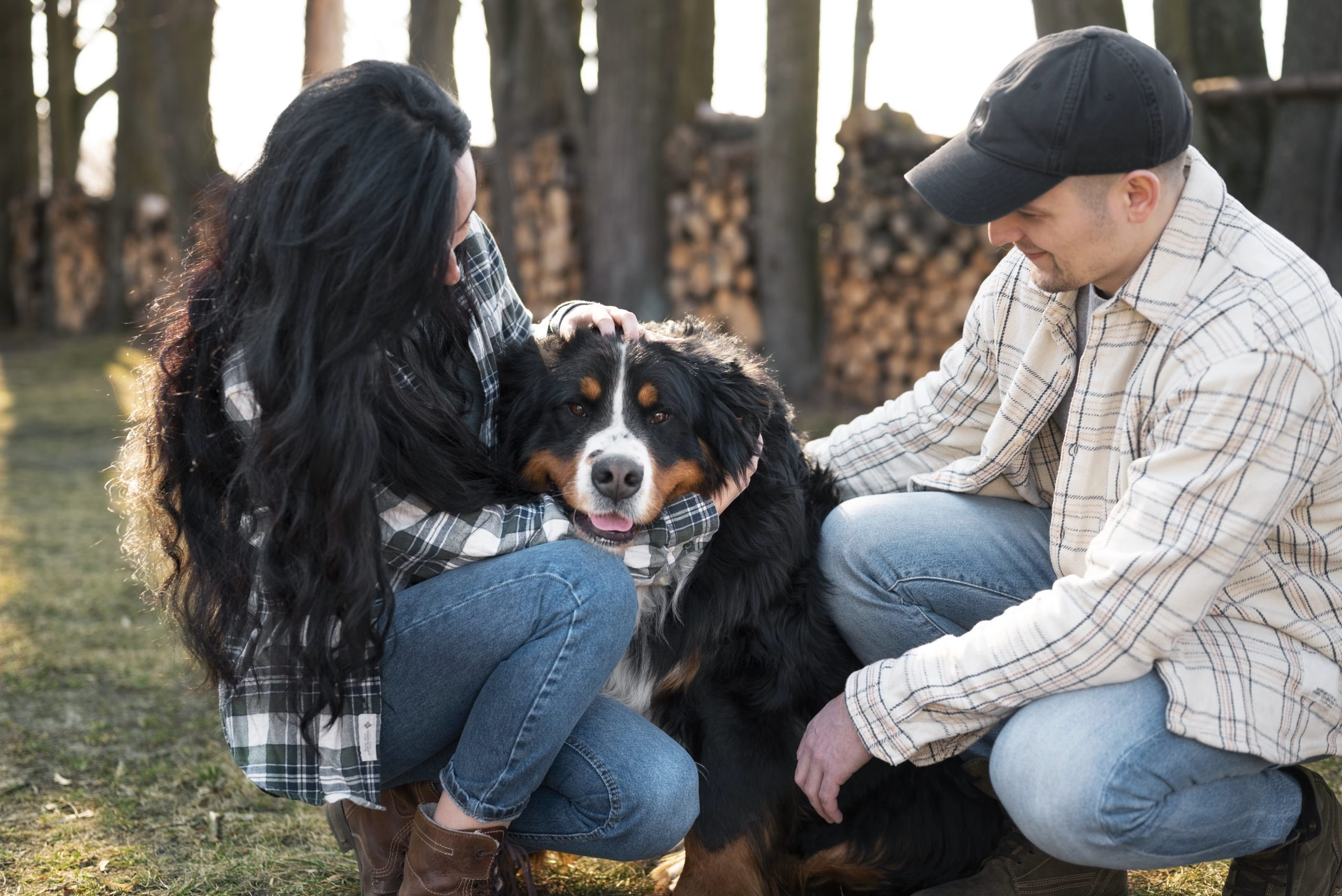
Bernese Mountain Dogs are gentle, people-focused dogs, but like any breed they can develop behavior problems — usually rooted in too little exercise, boredom, anxiety, or inconsistent training rather than a “bad” dog. Most issues respond well to routine, mental enrichment, and positive, consistent training. Here are the behaviors Berner owners ask about most, and practical ways to address them.
From my own experience: almost every “behavior problem” I’ve run into traced back to one of two things — not enough exercise, or me not being consistent enough. When mine get wound up (the classic is jumping and general chaos), what actually works is staying calm, ignoring the over-the-top behavior, and rewarding them the second they settle, instead of getting after them for being excited. The part that makes it stick is everyone in the house doing it the same way.
Common behavior problems and what actually fixes them
Separation anxiety
Berners bond closely with their families and can struggle when left alone for long stretches — one of the most common issues in the breed. Signs include destructive behavior, pacing, drooling, or vocalizing when you leave. Help by building up alone-time gradually, keeping departures and returns low-key, leaving a stuffed puzzle toy, and ensuring plenty of exercise before you go. Severe cases benefit from a professional behaviorist’s plan.
Destructive chewing and digging
Usually a sign of boredom, excess energy, or anxiety. Provide appropriate chew toys, increase daily physical and mental activity, and manage the environment (crate or dog-proofed space) when you can’t supervise. Redirect to an acceptable outlet rather than only punishing the behavior.
Jumping up
An 80–115 lb dog jumping on people is a real problem. Teach an alternative (sit for greetings), reward four-on-the-floor, and ask visitors to ignore the dog until it’s calm. Consistency from everyone in the household is what makes this stick.
Stubbornness and selective listening
Berners are smart but can be sensitive and a little stubborn. Harsh corrections tend to backfire — they respond best to short, upbeat, reward-based sessions. Keep training consistent and make compliance rewarding.
Excessive barking
Berners aren’t typically big barkers, so a sudden increase is worth understanding: boredom, alerting, anxiety, or seeking attention. Identify the trigger, meet the underlying need (more exercise/enrichment, less alone time), and avoid accidentally rewarding the barking with attention.
When to get help
If a behavior is escalating, anxiety-driven, or involves any aggression, work with a qualified positive-reinforcement trainer or a veterinary behaviorist. A sudden behavior change can also have a medical cause, so a vet check is wise when something shifts unexpectedly.
Socialization: the window that shapes everything
Good socialization is one of the most important things you can do for a Bernese Mountain Dog. Despite their naturally gentle temperament, Berners can become shy, fearful, or reactive without enough positive early exposure — and a fearful 100-pound dog is hard to manage. The goal is to build a confident, well-adjusted dog through positive experiences, at the right pace.
The prime socialization period runs from roughly 3 to 14–16 weeks of age, when puppies most readily accept new experiences. Exposure during this window pays off for life. That said, socialization never truly ends — keep it up through adolescence and adulthood.
What to socialize your puppy to
- People of different ages, appearances, and behaviors.
- Other dogs — calm, vaccinated, friendly ones; puppy classes are ideal.
- Environments — different floors, stairs, streets, car rides, the vet.
- Sounds — traffic, vacuums, thunder, household noise.
- Handling — paws, ears, mouth, and grooming tools, so vet and grooming visits are easy later.
Do it positively and at the dog’s pace
Quality matters more than quantity. Pair each new experience with treats and praise, keep sessions short and upbeat, and never force a frightened puppy into a situation — that can create the exact fear you’re trying to prevent. Let the puppy approach and retreat, and reward brave, curious behavior. Watch for stress signals (lip licking, yawning, tucking away) and give space when you see them.
Before vaccinations are complete
You don’t have to wait for the full vaccine series to start — the socialization window closes too soon for that. Socialize safely in the meantime: carry your puppy in busy areas, host calm vaccinated dogs at home, and attend a reputable puppy class that requires age-appropriate vaccinations. Ask your vet for guidance on balancing safety and socialization.
Socializing an adult or under-socialized dog
It’s harder but very possible. Go slowly, keep experiences positive and below the dog’s fear threshold, and use distance from triggers. If your adult Berner is fearful or reactive, a positive-reinforcement trainer can help you build a plan.
Reactivity and aggression: what to do and what not to do
True aggression is uncommon in well-bred, well-socialized Bernese Mountain Dogs — the breed standard calls for a gentle, good-natured temperament. But any dog can show aggression or reactivity, and in a dog this large it needs to be taken seriously and handled calmly and early. This article explains the common causes and a responsible approach; it is general information, not a substitute for a qualified trainer or veterinary behaviorist.
Growling, snapping, lunging, stiff posture, raised hackles, or barking and pulling toward a trigger. “Reactivity” (over-the-top responses to other dogs, strangers, or noises) often comes from fear or frustration rather than true aggression, but it can look alarming and can escalate if ignored.
Common causes
- Fear. The most common driver — a dog that feels threatened may react defensively, especially if under-socialized.
- Pain or illness. A normally gentle Berner that suddenly becomes irritable should see a veterinarian; pain is a frequent, overlooked cause.
- Resource guarding. Protecting food, toys, or space.
- Frustration. Barrier or leash frustration when a dog can’t reach something it wants.
- Lack of socialization. Dogs not exposed to varied people, dogs, and situations as puppies are more prone to fearful reactions.
A responsible approach
Rule out medical causes first with a vet visit. Then focus on management and positive methods: avoid or create distance from triggers while you work, and use reward-based desensitization and counter-conditioning to change the dog’s emotional response over time. A simple management step — like feeding dogs separately to prevent food guarding — often defuses a trigger while you work on it. Avoid punishment-based corrections — with a fearful or reactive dog they often increase anxiety and can make aggression worse. Never “punish the growl”; a growl is useful warning communication, and suppressing it can lead to bites without warning.
Get professional help — early
Because of the breed’s size and strength, don’t try to manage real aggression alone. Work with a certified positive-reinforcement trainer or, ideally, a veterinary behaviorist, who can assess triggers safely and build a tailored plan. Early intervention gives the best outcome and keeps everyone — people and dog — safe.
Related reading: how to train a Bernese puppy
