

ⓘ Affiliate Disclosure: This post contains affiliate links. As an Amazon Associate, we earn from qualifying purchases at no extra cost to you. Read our full disclosure.
Bringing home a Bernese Mountain Dog puppy is an unforgettable experience — and one that goes much more smoothly when you’re fully prepared. The first week home sets the foundation for your dog’s lifelong behavior, confidence, and bond with your family. This complete guide covers everything you need to have ready before pickup day, how to handle the first 24 hours, and what to prioritize in the first 30 days of your new life together.
Before Pickup Day: Your Pre-Arrival Checklist
The week before bringing your Berner puppy home should involve setting up your home environment, purchasing essential supplies, and scheduling your first veterinary appointment. Arriving unprepared creates unnecessary stress for both you and your puppy during a critical bonding window.
Essential Supplies to Have Ready
The Crate: A 48-inch dog crate with a divider panel is the right long-term size for a Berner — but start with the divider to reduce the space to puppy size (just big enough to stand, turn, and lie down). A crate that’s too large allows the puppy to eliminate in a corner, defeating the housetraining purpose. This is one of your most important purchases. Place it in a high-traffic area of your home (living room or kitchen) where the puppy can see and hear family activity, not isolated in a basement or garage.
The Bed: An orthopedic dog bed for large breeds is ideal — even for puppies. Starting good joint habits early matters for a breed predisposed to hip and elbow dysplasia. Get a washable cover, because accidents will happen.
Food and Water Bowls: Stainless steel bowls are hygienic and durable. For a breed at risk of bloat (GDV), an elevated feeding stand ($30–$60) is worth considering — though discuss the pros and cons with your vet, as research on elevated feeders and bloat risk is still evolving.
Collar, Leash, and ID Tags: Get an adjustable collar in a medium-large size (Berners grow fast!) and have an engraved ID tag made with your phone number before the puppy comes home — not after. A standard 6-foot puppy leash for large breeds is ideal to start.
Puppy Food: Ask your breeder exactly what food the puppy has been eating and buy a bag of the same food. Do not switch foods immediately — abrupt dietary changes cause digestive upset in puppies. If you want to transition to a different food, wait 2 weeks and then make the switch gradually over 7–10 days by mixing increasing amounts of the new food with decreasing amounts of the old.
Enzymatic Cleaner: Buy a large bottle of enzymatic pet stain and odor remover before the puppy arrives. Enzymatic cleaners break down the urine proteins that standard cleaners leave behind — and those proteins are what attract puppies back to the same spot. This is not optional. You will use it.
Baby Gates: Set up gates to limit your puppy’s access to appropriate areas of the home from day one. Restricting access makes housetraining significantly easier and prevents destructive chewing in unsupervised areas. At minimum, gate off any stairs — Berner puppies should not navigate stairs frequently during the rapid bone growth phase (under 6 months).
Puppy Toys: A variety of toys helps meet different needs — a chew toy, a tug toy, a puzzle feeder, and a soft plush toy. Avoid toys with small parts that can be swallowed. Rotate toys to keep them novel and interesting.
Sizing Gear for the Adult Dog, Not the Puppy
Start with containment and safety. A Berner puppy does not stay small for long, so buy with adult size in mind where it makes sense. A crate with a divider is usually smarter than a tiny crate you will replace in a month. Baby gates matter too, especially if you need to limit stairs, protect children’s spaces, or keep your puppy out of the kitchen during busy hours.
Your puppy will also need a properly sized collar or harness, a leash, food and water bowls, and an ID tag right away. For many families, a harness feels easier than a collar for a strong, growing dog, but fit matters. A poor fit can rub, encourage pulling, or slip off during those first uncertain walks.
Chew management belongs near the top of the list, not as an afterthought. Bernese puppies explore with their mouths and can be surprisingly determined. Safe chew toys, durable soft toys, and a few food puzzle options help prevent your hands, table legs, and shoes from becoming entertainment.
Choosing a Large-Breed Puppy Food
A large-breed puppy food is one of the most important decisions on your checklist. Bernese Mountain Dogs need controlled growth, not the fastest growth possible. Food formulated for large-breed puppies is designed with that in mind, which can help support bone and joint development.
Do not switch foods abruptly during the first few days unless your veterinarian tells you to. If your breeder or rescue has the puppy on a food that is working, transition gradually if you plan to change it. Sudden changes can trigger stomach upset, and this breed already gives owners enough to worry about without adding avoidable digestive drama.
You will also want a feeding routine. Most young puppies do best with multiple small meals a day rather than one or two large ones. Consistency helps with housetraining, digestion, and behavior. It also lets you notice early if your puppy starts eating less, which is something Bernese owners should never ignore for long.
Puppy-Proofing Your Home
Before your puppy arrives, do a ground-level inspection of every room they’ll access. Get down on your hands and knees and look for hazards from a puppy’s perspective:
- Electrical cords (chewing cords is a life-threatening hazard — use cord covers or cord managers)
- Toxic houseplants (include common ones like pothos, philodendron, and peace lily — all toxic to dogs)
- Low cabinets without childproof latches (cleaning products, medications)
- Items on low shelves or coffee tables that can be grabbed and chewed
- Small objects on the floor that could be swallowed
- Gaps behind furniture or appliances where a puppy could get stuck
Traction, Stairs and Temperature: Proofing for a Giant Breed
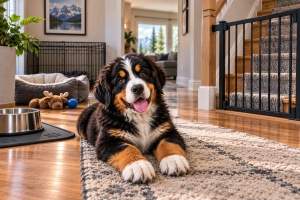
Puppy-proofing for a Bernese goes beyond picking up cords and hiding the trash can. Think about space, traction, and access. Slippery floors can be hard on growing legs, so rugs or runners are worth having in the areas your puppy uses most. That is especially helpful in hallways, near doorways, and around food and water stations.
Stairs are another thing to consider carefully. A few steps here and there may be unavoidable, but repeated stair use is not ideal for a large-breed puppy whose joints are still developing. If your bedroom is upstairs and your puppy setup is downstairs, decide in advance how you are going to handle nighttime, naps, and supervision.
Temperature matters too. Berners have thick coats and can overheat more easily than many first-time owners expect. Make sure your puppy has a cool resting area, reliable shade outdoors, and no reason to spend long stretches in hot, humid conditions.
The First 24 Hours: What to Expect and What to Do
The drive home and first night are often stressful for both puppy and family. Understanding what’s normal helps you respond calmly and set the right tone.
The Drive Home
Have someone ride in the backseat with the puppy, holding them in a lap or in a secure travel crate. Do not let the puppy ride in the front seat or unrestrained — a hard stop can throw a puppy with serious force. Most puppies experience some nausea or anxiety during their first car ride. Have towels or a waterproof blanket ready. Keep the car cool and the drive as calm and smooth as possible.
Arriving Home
Resist the temptation to immediately introduce the puppy to a crowd of excited friends and family. Your new Berner needs time to decompress and orient. Take them directly to your designated “puppy bathroom spot” in the yard and give them 5–10 minutes to sniff and hopefully eliminate (they very likely need to go after the drive). Praise and reward with a treat immediately if they do.
Then, quietly introduce your puppy to the kitchen or living room area that will be their initial home base. Let them explore at their own pace. Keep interactions gentle, calm, and brief in the first few hours. Overstimulation leads to biting, running, and frantic energy — not the bonding experience you want.
The First Night
Almost every new Berner owner asks about the first night. The puppy will likely cry when placed in the crate. This is normal — they have just left their mother and littermates for the first time. The most effective approach is to place the crate next to your bed (not across the room) so your puppy can hear and smell you. Many experienced owners recommend placing an item of your clothing in the crate to provide scent comfort.
Do NOT open the crate door when the puppy cries — this teaches them that crying opens doors. Instead, quietly say “shhh” or place your fingers near the crate door. Plan to set an alarm to take your puppy outside to eliminate every 3–4 hours through the night for the first week — puppies simply cannot hold their bladder overnight at 8 weeks old.
The First Week: Building Foundations
The first week home should focus on three things: establishing a routine, beginning housetraining, and continuing socialization. Here’s a practical daily schedule to follow:
6:00 AM: Outside immediately for bathroom; brief praise and reward
6:15 AM: Breakfast (¼ of the day’s food)
6:30 AM: Short play session (15 minutes maximum)
7:00 AM: Crate for nap (puppies need 16–18 hours of sleep per day)
10:00 AM: Outside for bathroom; brief socialization exposure
10:15 AM: Second meal
12:00 PM: Short walk (10–15 minutes maximum at 8 weeks)
12:30 PM: Crate for nap
3:00 PM: Outside for bathroom; play and socialization
5:30 PM: Third meal
7:00 PM: Calm family time; short training session (5 minutes, name/sit/come)
9:00 PM: Final outside bathroom trip
9:30 PM: Crate for the night (take outside once at 1–2 AM)
The First Month: Priorities and Milestones
Week by week in the first month, here’s what to focus on:
Week 1: Routine, Housetraining, Name Recognition
The only training goals for week 1 are: learn the routine, respond to your name, and sit. Keep training sessions to 3–5 minutes, 2–3 times per day. Everything else is management — crate, gates, supervision, and taking the puppy outside every 45–60 minutes (plus immediately after waking and after eating).
Week 2: Continue Socialization, Add “Come”
If your puppy has had at least the first round of vaccines, begin carefully planned socialization outings. Pet stores like PetSmart allow dogs and provide a good socialization environment. Begin teaching “come” — the most important safety command your dog will ever learn. Use extremely high-value treats (small pieces of chicken or cheese) and always make coming to you the best thing that ever happens.
Week 3-4: Enroll in Puppy Class
Enroll in a puppy socialization class that starts in weeks 3–4 home. The structured environment, professional guidance, and puppy-to-puppy interaction are invaluable. Look for classes that use positive reinforcement methods exclusively — punishment-based training is particularly harmful for the sensitive Berner temperament.
Grooming a Berner Puppy From Day One
A Bernese puppy may look low maintenance at first because the coat still feels soft and manageable. That phase does not last. Grooming supplies belong on your checklist early so your puppy learns that brushing, nail trims, and bathing are normal parts of life.
You will want a gentle slicker brush, a comb, dog-safe shampoo, nail clippers or a grinder, and ear-cleaning supplies approved by your veterinarian. A high-velocity dryer is not necessary for every home on day one, but regular coat care is. Berners shed year-round and often blow coat heavily during seasonal changes.
The goal with a puppy is not perfect grooming. The goal is cooperation. Short, positive handling sessions pay off later when your dog weighs 90 pounds and has opinions about being brushed.
Vet care and health planning cannot wait
One of the biggest mistakes new owners make is focusing on supplies and forgetting the medical calendar. Schedule your first veterinary appointment before pickup day if possible. That first visit helps establish a baseline, confirm vaccine timing, discuss parasite prevention, and answer breed-specific questions.
This is also the time to talk openly about Bernese health risks. Hip and elbow concerns, orthopedic development, stomach issues, and bloat risk should be part of the conversation early. A puppy cannot be screened for every future problem immediately, but your vet can help you build smart routines around growth, exercise, body condition, and warning signs.
Pet insurance is worth considering before problems appear. For a breed with meaningful health vulnerabilities, waiting until something happens usually means that issue is no longer covered. Not every policy fits every family, but this is one area where planning ahead can save real heartache.
Keep a folder or app with vaccine dates, deworming records, breeder paperwork, microchip details, and notes from each appointment. It sounds simple, but good records matter when your puppy is growing quickly and multiple care decisions overlap.
Training supplies are not enough without a training plan
Bernese Mountain Dogs are famously loving, but that does not mean they train themselves. A sweet puppy who jumps on guests at 20 pounds becomes a very different challenge at 80 pounds. Start manners early and keep sessions short, calm, and consistent.
Treats, a clicker if you like using one, poop bags, and a leash are the easy part. The real checklist item is a plan for socialization and basic training. That means exposure to people, surfaces, sounds, handling, car rides, and everyday life in a controlled way. It does not mean overwhelming your puppy with chaos.
Puppy class can be a great fit, especially for first-time large-breed owners, but choose carefully. A good class emphasizes confidence, body awareness, positive reinforcement, and polite behavior. If the environment feels too rough or overstimulating for your puppy, it may not be the right one.
Exercise for a Berner puppy is a balancing act
Many new owners either do too little or far too much. Bernese puppies need movement, play, and mental stimulation, but they do not need forced endurance exercise. Long runs, repeated jumping, and intense activity on hard surfaces can put unnecessary stress on developing joints.
Instead, think in terms of several short walks, supervised play, basic training, sniffing opportunities, and rest. Berners often have a calm, cuddly image, but puppies still need enrichment. A bored Berner puppy can become mouthy, stubborn, or destructive.
The right amount of activity depends on age, temperament, weather, and your puppy’s physical condition. If your puppy seems overtired, sore, or reluctant after activity, that is useful information. More exercise is not always better with this breed.
Budget Items People Forget
The purchase or adoption fee is only the beginning. Your bernese mountain dog puppy checklist should include routine vet care, high-quality food, grooming tools, training classes, parasite prevention, larger crates and beds, and emergency savings.
Because Berners grow so quickly, you may replace gear sooner than expected. Collars, harnesses, and even sleeping setups can become too small in a matter of weeks. It is smart to buy a few essentials now and wait on some size-specific items until you know how your puppy is developing.
If you are stretching your budget to bring home the puppy itself, pause and rework the numbers. This breed is deeply rewarding, but it is not inexpensive to own well.
First-night and first-month essentials
The first night is easier when you already know where your puppy will sleep, how often you will take them out, and who is responsible for early-morning potty trips. Keep the setup simple. A crate near your bed often helps with adjustment and gives you a better chance of catching nighttime needs before they turn into accidents.
For the first month, focus on routine more than perfection. Prioritize sleep, potty training, gentle bonding, name recognition, handling, and predictable meals. You do not need to teach everything in the first two weeks. You do need to help your puppy feel secure and understood.
A Bernese Mountain Dog thrives when home feels steady. That is why the best checklist is not really about buying the most things. It is about preparing for the kind of care this tender, powerful breed truly needs. When your puppy finally rests their big paws on your floor and looks up at you, the goal is simple: you are ready to meet that trust with calm, capable love.
Frequently Asked Questions: Bringing Home a BMD Puppy
What age should Bernese Mountain Dog puppies come home?
8 weeks is the ideal age — after the breeder’s early socialization programming but within the critical 8–16 week socialization window that shapes the puppy’s personality for life. Many breeders wait until 8–10 weeks depending on litter development.
How long does it take to housetrain a Bernese Mountain Dog puppy?
With consistent supervision, crate training, and a regular schedule, most Berner puppies are reliably housetrained by 4–6 months. However, true bladder control doesn’t develop fully until 6–9 months, so accidents are normal well past the point where the puppy “knows” they should go outside.
How do I help my Bernese Mountain Dog puppy sleep through the night?
Place the crate next to your bed, limit water intake after 8 PM, always take the puppy outside immediately before bedtime, and plan to take them out once in the middle of the night for the first 4–6 weeks. By 10–12 weeks, most puppies can sleep 6–7 hours without a midnight trip.
Should I crate train my Bernese Mountain Dog puppy?
Absolutely yes. Crate training is one of the most humane and effective tools for housetraining and keeping your puppy safe. A properly introduced crate becomes a voluntary retreat — most Berner owners find their adult dogs choose to sleep in their crates long after they’re no longer “required” to.
What vaccinations does a Bernese Mountain Dog puppy need?
Your puppy should receive the DHPP (distemper/hepatitis/parvovirus/parainfluenza) series at 8, 12, and 16 weeks; Bordetella; Leptospirosis; and Rabies (usually given at 12–16 weeks). Your veterinarian will recommend a schedule based on your geographic location and lifestyle.
Common Mistakes New Berner Owners Make in the First Month
Learning from the mistakes of others is one of the fastest ways to set yourself up for success. Here are the most common first-month errors Bernese Mountain Dog owners report in hindsight:
Letting the Puppy “Cry It Out” in a Distant Room
Isolating a crying puppy in a separate room or basement doesn’t teach them to be quiet — it teaches them that the world is frightening and that their people abandon them when they need help. Place the crate in your bedroom or immediately outside your bedroom door. The puppy will settle faster and develop more confidence when they can sense your presence.
Skipping Puppy Class Because “Berners Are Gentle”
Bernese Mountain Dogs are indeed gentle by nature — but a 100+ lb adult dog who hasn’t been trained is still a genuine management challenge. Puppy class is about much more than teaching commands: it’s structured socialization with other puppies under expert supervision, and it builds your relationship and communication with your dog from the very beginning.
Over-Exercising During the Growth Phase
This is one of the most common and most damaging mistakes. Excited new owners want to take their Berner everywhere and exercise them constantly. But until growth plates close (around 18–24 months), forced, repetitive exercise on hard surfaces risks joint damage. Follow the 5-minute-per-month-of-age guideline strictly, especially in the first 6 months.
Feeding the Wrong Food
Feeding a “regular” puppy food (not a large-breed formula) to a Berner puppy can contribute to the developmental orthopedic disease that already affects this breed at high rates. Always use a food specifically formulated for large-breed puppies, with controlled calcium and phosphorus ratios, until 12–18 months of age.
Waiting Too Long to Vet-Check the Puppy
Schedule your first veterinary appointment for within 48–72 hours of bringing your puppy home, even if the breeder provided a clean health certificate. This establishes your vet relationship, confirms your puppy’s health, and begins the vaccination and parasite prevention schedule. Many health guarantees also require a vet exam within the first 72 hours to remain valid.
The Importance of Finding a BMD-Knowledgeable Veterinarian
Not all veterinarians are equally familiar with breed-specific health concerns, and Bernese Mountain Dogs have several that require proactive attention. When choosing a vet, ask specifically about their experience with giant breeds and their recommendations on spay/neuter timing for Berners (a topic where guidance has evolved significantly — most now recommend waiting until 18–24 months for large breeds).
A good BMD-knowledgeable veterinarian will discuss proactive joint supplementation starting around 12–18 months, recommend regular OFA-level monitoring x-rays if any gait abnormalities appear, be familiar with histiocytic sarcoma and other Berner-specific cancer risks, and take bloat prevention seriously with a deep-chested breed. Finding this vet before your puppy comes home — not in a crisis — is one of the best investments in your dog’s long-term health.
Building the Bond: The Most Important Thing You’ll Do in the First Month
All the supplies, the schedule, the training — they support the real goal of the first month: building a bond of trust and communication with your Bernese Mountain Dog. Berners are deeply loyal and emotionally sensitive dogs. The security and attachment formed in puppyhood shapes how they relate to the world as adults.
Spend time simply being with your puppy — sitting with them in the yard, letting them rest against you, making every interaction positive and predictable. The Berner who grows up trusting completely that their person is safe and reliable becomes the calm, confident, joyful companion this breed is legendary for being. The investment you make in these first 30 days pays dividends for every year of your dog’s remarkable, if too-short, life.
As your puppy grows, track their development with our Bernese Mountain Dog puppy growth chart — covering expected weight milestones from birth to 24 months. And when the adolescent phase hits (as it will), our guide on when Bernese Mountain Dogs calm down gives you realistic expectations and practical survival strategies. For training foundations, our Bernese Mountain Dog training guide covers the 10 most important techniques for raising a well-behaved Berner.
