

ⓘ Affiliate Disclosure: This post contains affiliate links. As an Amazon Associate, we earn from qualifying purchases at no extra cost to you. Read our full disclosure.
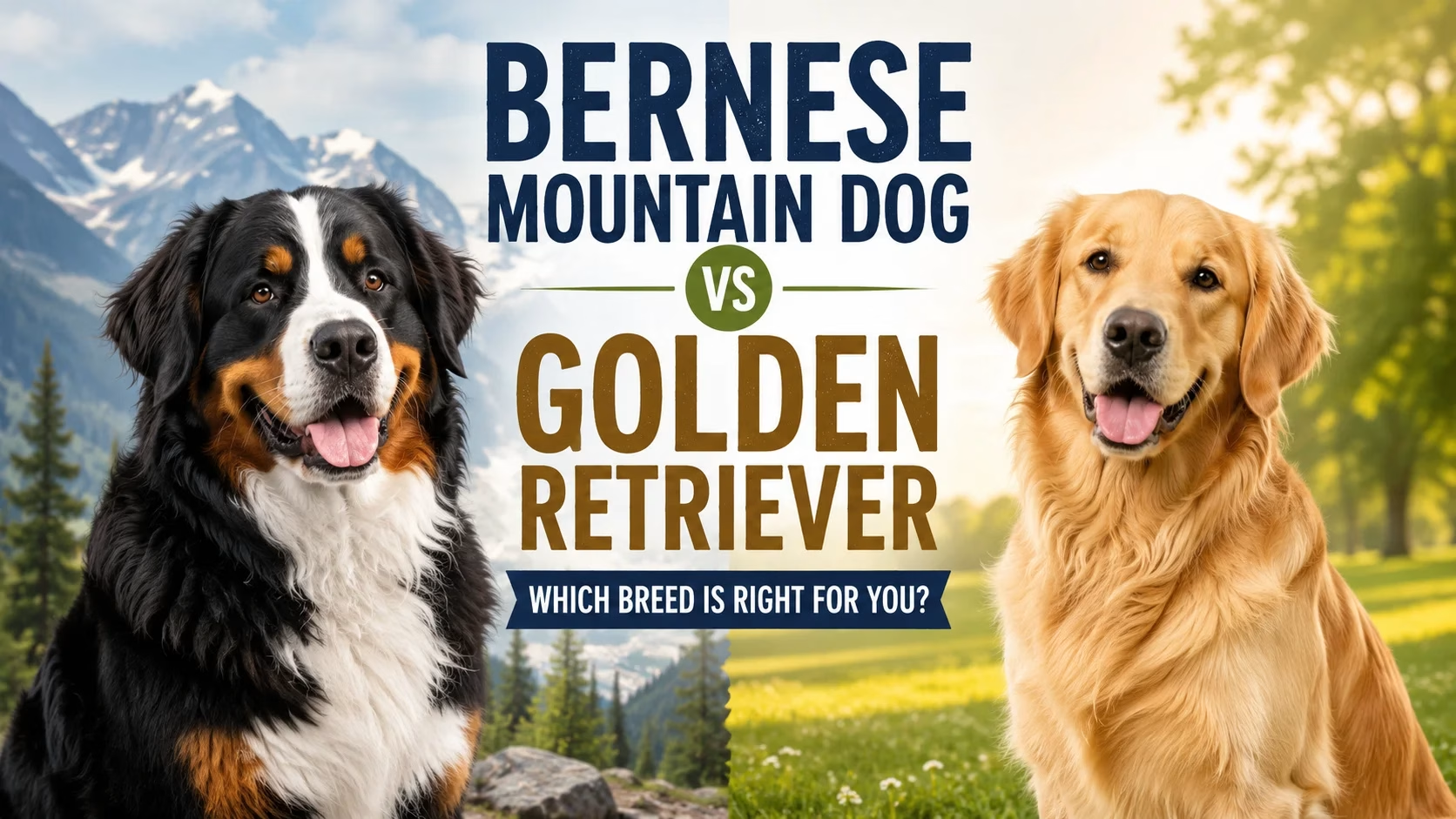
Choosing between a Bernese Mountain Dog and a Golden Retriever is one of the most common dilemmas prospective large-dog owners face. Both breeds are gentle, family-friendly, and deeply loyal — yet they differ significantly in size, lifespan, grooming needs, health, exercise requirements, and cost. This in-depth comparison will help you decide which breed is the right match for your lifestyle, family, and home.
Bernese Mountain Dog vs Golden Retriever: Quick Comparison
| Trait | Bernese Mountain Dog | Golden Retriever |
|---|---|---|
| Size | Large (70–115 lbs) | Medium-Large (55–75 lbs) |
| Lifespan | 7–10 years | 10–12 years |
| Coat Type | Long, thick double coat (tri-color) | Medium-length double coat (gold) |
| Grooming Needs | High (daily brushing during shedding) | Moderate (weekly brushing) |
| Exercise Needs | Moderate (60 min/day) | High (60–90 min/day) |
| Energy Level | Calm-moderate (especially indoors) | Moderate-high, energetic |
| Trainability | Very good (sensitive, eager to please) | Excellent (highly trainable) |
| Good with Kids | Excellent (gentle giants) | Excellent (patient, playful) |
| Good with Other Pets | Very good | Excellent |
| Puppy Price | $2,500–$4,500 | $1,500–$3,000 |
| Monthly Cost | $400–$750 | $300–$550 |
| Apartment Friendly? | Not ideal (needs outdoor space) | Better (adaptable with exercise) |
| Heat Tolerance | Low (prefers cold climates) | Moderate |
| Cancer Risk | Very high (roughly 50% of deaths) | High (above average for dogs) |
Size and Physical Differences
The most immediately obvious difference is size. Bernese Mountain Dogs are substantially larger than Golden Retrievers. Adult male Berners weigh 80–115 pounds and stand 25–27.5 inches at the shoulder, while females weigh 70–95 pounds. Golden Retrievers are considered a medium-large breed, with males weighing 65–75 pounds and females 55–65 pounds at 21.5–24 inches tall.
This size difference matters practically. Berners need more space — a larger crate, a bigger vehicle, and a yard with adequate room to move comfortably. Their sheer mass means accidental knockdowns of small children are more likely, and controlling them on-leash if training is neglected is genuinely difficult. Both breeds require a no-pull harness for large breed dogs during the adolescent phase when leash manners are still developing.
Temperament: Which Breed Is More Suitable for Families?
Both the Bernese Mountain Dog and the Golden Retriever rank among the top family breeds — but they have distinctly different personalities.
Bernese Mountain Dog Temperament
Berners are famously gentle giants. They are calm, patient, and deeply affectionate with their families, especially children. They tend to be more reserved with strangers than Goldens and often bond most deeply with one primary person while remaining loving with the whole family. Berners are sensitive — they respond poorly to harsh correction and thrive with positive reinforcement. They can be slow to mature, remaining puppy-like in behavior until 2–3 years old.
Golden Retriever Temperament
Goldens are famously outgoing and exuberant. They tend to love everyone — strangers, children, other dogs — almost universally. Goldens are more overtly enthusiastic, which makes them slightly more prone to jumping and excited behavior than the calmer Berner. They mature faster and are often easier to train from a young age due to their high food motivation and eagerness to please.
Verdict: Both are exceptional family dogs. Choose a Berner if you want a calmer, more “majestic” companion who is deeply loyal but slightly more reserved. Choose a Golden if you want an exuberant, universally friendly dog who is slightly easier to train and more tolerant of hot weather.
Grooming Requirements: A Major Practical Difference
Grooming is one area where the two breeds differ significantly in the work they require.
The Bernese Mountain Dog’s long, thick, tri-colored double coat is gorgeous but demanding. They shed heavily year-round and blow their coat (shed intensely) twice a year in spring and fall. During shedding season, daily brushing is essential to prevent matting and manage the volume of hair. A quality undercoat rake and deshedding brush is a must-have for Berner owners.
Golden Retrievers have a medium-length double coat that also sheds significantly but requires somewhat less intensive grooming than a Berner’s coat. Weekly brushing with occasional professional grooming every 8–10 weeks is typical. Goldens’ coats tend to be more forgiving if you miss a brushing session — Berners’ coats can tangle more readily without consistent maintenance.
Health Comparison: Two Breeds With Serious Concerns
This is the most sobering part of the comparison. Both breeds carry above-average cancer risk compared to the general dog population — but Berners face a particularly stark reality.
Bernese Mountain Dog Health
- Cancer: Roughly 50% of Bernese Mountain Dog deaths are attributed to cancer — one of the highest rates of any breed. Histiocytic sarcoma is particularly prevalent and aggressive in Berners.
- Hip and Elbow Dysplasia: A major concern requiring OFA testing in breeding dogs.
- Bloat (GDV): A life-threatening emergency that deep-chested breeds like Berners are at elevated risk for.
- Degenerative Myelopathy: A progressive neurological disease that affects mobility in older Berners.
- Lifespan: 7–10 years average — shorter than most large breeds of comparable size.
Golden Retriever Health
- Cancer: Goldens have a higher cancer rate than most breeds — approximately 60% of Goldens die from cancer. This is a major concern shared with Berners.
- Hip Dysplasia: Also common; OFA testing is standard for reputable Golden breeders.
- Heart Disease: Subvalvular aortic stenosis (SAS) is a notable concern in Goldens.
- Hypothyroidism: More common in Goldens than in Berners.
- Lifespan: 10–12 years — notably longer than the Berner’s 7–10 year average.
Verdict: Both breeds carry serious health risks and both require comprehensive pet insurance from puppyhood. The shorter lifespan of the Bernese Mountain Dog is the hardest reality for Berner owners to accept — but it doesn’t diminish the depth of the bond formed in those years.
Exercise and Activity Level

Both breeds need regular exercise, but their energy profiles are somewhat different. Golden Retrievers were bred as sporting dogs — they have high endurance and genuinely love extended outdoor activities like fetch, swimming, and hiking. They need 60–90 minutes of exercise daily and become destructive if under-stimulated.
Bernese Mountain Dogs, while capable of hiking and outdoor activities, are more moderate in their exercise needs. They typically need 60 minutes of moderate exercise daily and can be surprisingly calm indoors once their physical needs are met. Berners are not well-suited to hot weather exercise — anything above 75°F should be approached cautiously, with activity limited to early morning or evening hours.
Which Breed Is Right for You?
Here’s a simple framework to help you decide:
Choose a Bernese Mountain Dog if: You live in a cooler climate, have a large home with a yard, want a calmer indoor companion, love a stunning coat, and are prepared for a shorter lifespan and higher health costs.
Choose a Golden Retriever if: You want a slightly more energetic, universally friendly dog who is easier to train, more heat-tolerant, and tends to live a few years longer. Goldens are also more adaptable to smaller homes if given adequate daily exercise.
Frequently Asked Questions: Bernese Mountain Dog vs Golden Retriever
Which breed is more family-friendly: Bernese Mountain Dog or Golden Retriever?
Both are outstanding family dogs. Goldens tend to be more universally friendly and slightly easier to train, while Berners are calmer and more deeply bonded to their immediate family. Either breed is an excellent choice for families with children.
Do Bernese Mountain Dogs shed more than Golden Retrievers?
Yes — Berners generally shed more and require more intensive grooming than Goldens. Their long, thick tri-color double coat sheds heavily year-round and requires daily brushing during seasonal shedding.
Which breed lives longer — Bernese Mountain Dog or Golden Retriever?
Golden Retrievers typically live 10–12 years compared to the Bernese Mountain Dog’s 7–10 year average. The shorter Berner lifespan is a significant emotional consideration for prospective owners.
Are Bernese Mountain Dogs harder to train than Golden Retrievers?
Goldens are often considered slightly easier to train due to their higher food motivation and outgoing nature. Berners are very trainable but more sensitive — they respond better to very gentle, positive methods and can shut down with harsh correction.
Which breed is more expensive to own?
Bernese Mountain Dogs cost more across the board — higher purchase price ($2,500–$4,500 vs $1,500–$3,000), higher grooming costs, and often higher veterinary costs due to their health profile. Pet insurance is essential for both breeds.
Cost of Ownership: Bernese Mountain Dog vs Golden Retriever
For many families, the financial commitment is a deciding factor. Let’s look at the real numbers side by side:
| Expense | Bernese Mountain Dog | Golden Retriever |
|---|---|---|
| Puppy Purchase | $2,500–$4,500 | $1,500–$3,000 |
| Monthly Food | $80–$200 | $60–$140 |
| Monthly Grooming | $60–$120 | $40–$90 |
| Annual Vet (healthy) | $500–$1,500 | $400–$1,200 |
| Pet Insurance | $80–$150/month | $60–$120/month |
| Total Annual (healthy) | $3,820–$8,580 | $2,800–$6,000 |
The cost difference adds up significantly over a lifetime. With a Berner’s 7–10 year lifespan vs a Golden’s 10–12 years, you’ll spend more per year on the Berner and fewer years overall. This isn’t a reason to avoid Berners — many owners consider the experience priceless — but it’s important to be financially prepared.
Living With Each Breed: Day-to-Day Differences
Beyond the statistics, the day-to-day experience of living with these breeds is what truly matters. Here’s what owners of each report after years of experience:
Life With a Bernese Mountain Dog
Berner owners consistently describe their dogs as the most gentle and patient family companions imaginable. Berners tend to follow their people from room to room, lying nearby and maintaining close contact. They are not high-energy in the home — a well-exercised Berner will happily spend hours resting near you. They tend to be more cautious in new situations and with new people than Goldens, preferring to observe before engaging. Many Berner owners describe a profound, almost spiritual bond with their dogs — and an equally profound heartbreak when that short life comes to an end.
Still deciding on the details? Two other guides cover the questions that come up most often before a Berner comes home: whether to get a male or female Bernese — the temperament differences are real but smaller than most people expect — and what size crate a Bernese actually needs, which is the one purchase people most often get wrong on the first try.
Life With a Golden Retriever
Golden owners describe a more consistently exuberant companion — a dog who is thrilled by life, loves everyone, and maintains puppy-like energy well into adulthood. Goldens are more oral (chewing, carrying things) and more likely to be “busy” if under-stimulated. They excel in dog sports, therapy work, and any activity that involves being with people and using their minds. Golden owners frequently note that their dogs seem to never have a bad day, bringing a relentlessly positive energy to the household.
Breed-Specific Supplies Worth Knowing
Regardless of which breed you choose, there are some supplies specific to each that are worth knowing about before you bring your puppy home:
For Bernese Mountain Dogs, a high-quality cooling mat for large dogs is essential for summer months, as Berners struggle in heat. An elevated feeding station helps manage their deep chest and reduces bloat risk. For their coat, a FURminator deshedding tool for large long-haired dogs is one of the best investments you’ll make.
For Golden Retrievers, invest in high-quality fetch toys and swimming gear — a ball launcher and a floating dog toy for water play. Their retrieval instinct is powerful and channeling it into structured fetch sessions is one of the best ways to meet their exercise needs efficiently.
Both breeds benefit enormously from early socialization, puppy classes, and obedience training. The investment in training pays dividends for the dog’s entire life — a well-trained 100+ lb dog is an absolute joy, while an untrained one is a genuine challenge regardless of how gentle the breed naturally is.
Before making your final decision, review the complete financial picture in our guide on how much a Bernese Mountain Dog costs. To understand the health considerations specific to Berners, our complete Berner health problems list covers all the major conditions affecting the breed so you can make a fully informed choice.
