
ⓘ Affiliate Disclosure: This post contains affiliate links. As an Amazon Associate, we earn from qualifying purchases at no extra cost to you. Read our full disclosure.
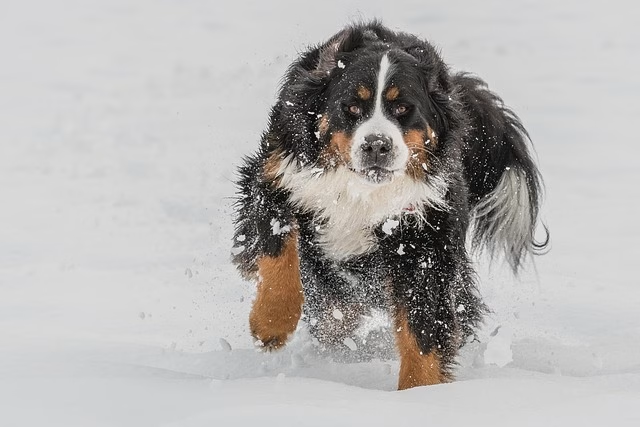
Bernese Mountain Dogs are built for cold. Their thick double coat comes from the Swiss Alps, and most Berners are genuinely happiest when the temperature drops. That doesn’t mean winter needs zero planning — there are a few real cold-weather considerations, and a short list of accessories that are actually worth it for this breed.
How cold is too cold?
With their insulating coat, healthy adult Berners are comfortable in cold and snowy conditions that would have other breeds shivering. They generally enjoy winter walks and snow. Use common sense in extreme cold or wind chill, and watch puppies, seniors, and any dog with health issues more closely — they lose heat faster and shouldn’t be out as long. Signs a dog is too cold include shivering, lifting paws, reluctance to keep walking, or whining to go in.
Paw care is the real winter issue
For a coated breed like the Berner, paws need more winter attention than the body does. Road salt and chemical de-icers can irritate and crack paw pads, and ice balls form between the toes on long-haired feet.
- Trim the hair between the paw pads to reduce ice buildup.
- Wipe or rinse paws after walks to remove salt and de-icer (which is also harmful if licked off).
- A paw balm or wax adds a protective layer before walks.
- Dog boots help on heavily salted sidewalks, if your dog will tolerate them — introduce them gradually.
Which winter accessories are worth it
Berners rarely need a coat — their own coat does the job, and a jacket can even cause overheating during active play. Save outerwear for puppies, seniors, short-coated individuals, or long periods of standing around in extreme cold. The accessories that genuinely earn their place for most Berners are paw protection (balm or boots), a quick-dry towel for snowy returns, and good traction at home for slippery floors. Reflective or light-up gear is worth it for the long dark evenings of winter.
Ice balls, salt and the things that actually go wrong
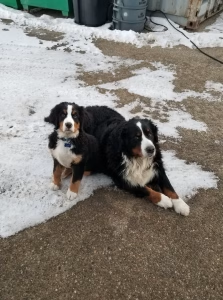
Cold air is rarely what causes a Berner trouble in winter. The problems are almost all at ground level.
Ice balls between the toes. Snow packs into the hair between the pads, body heat melts it, and it refreezes into hard marbles that force the toes apart. A dog that suddenly starts limping or lifting a foot halfway through a winter walk usually has these, not an injury. Prevention is straightforward: trim the interdigital hair level with the pads — level with, not shaved out, since that hair also insulates — and use a paw balm or boots on days with wet, sticky snow. To remove them, warm water and patience. Do not pick them out; they take skin with them.
Road salt and ice melt. The de-icers used on sidewalks and driveways are irritants on contact and a real problem once the dog licks its feet afterwards, which every dog does. Rinse or wipe the paws when you come in. If you are buying for your own driveway, pet-safe formulations exist and are worth the difference.
Antifreeze. This is the winter hazard that kills dogs. Ethylene glycol tastes sweet, dogs will readily drink it off a garage floor or from a puddle under a parked car, and a small amount causes fatal kidney failure. It is a genuine emergency with a narrow treatment window — if you suspect any ingestion at all, do not wait to see whether the dog seems unwell. Go to a vet immediately.
Frostbite, where it actually happens. The thick coat protects the body. The exposed extremities are what suffer: ear tips, the tip of the tail, the scrotum on an intact male, and the paw pads. Early frostbite looks pale or grey and feels cold and firm, then becomes red, swollen and painful as it rewarms. Rewarm gradually with body heat or lukewarm water — never hot water, and never rub the area.
Does a Bernese actually need a coat?
Usually not. Putting a jacket on a healthy adult Berner in dry cold is mostly for the owner’s benefit. The double coat works by trapping air in the loft of the undercoat, and a snug jacket that compresses that loft can genuinely make a dog colder rather than warmer.
The situations where a coat earns its place are specific:
- Wet cold. A soaked coat loses its insulation. Freezing rain and slush are harder on a Berner than dry cold twenty degrees lower, and a waterproof shell makes a real difference.
- Puppies. A young puppy has less undercoat and a worse surface-area-to-mass ratio than an adult.
- Senior or unwell dogs, and any dog that has lost condition.
- Any dog that has been clipped — one more reason not to shave a Berner.
For a healthy adult in dry cold, the gear worth buying protects the feet, not the back.
Winter feeding and condition
There is a persistent idea that dogs need more food in winter. It depends entirely on what the dog is doing. A Berner genuinely working outdoors in the cold burns more. A house dog whose walks have shortened from an hour to fifteen minutes because of the weather burns considerably less, and quietly puts on weight across a winter.
Go by body condition rather than the calendar. You should be able to feel ribs easily under a light covering, see a waist from above and a tuck from the side. On a heavily coated dog you have to use your hands — a Berner in full winter coat hides a lot of weight, and extra weight is the last thing you want on hips and elbows already carrying a large dog.
Indoor winter care
Indoor heating dries out skin and coat, so keep up regular brushing and make sure water stays fresh and unfrozen if any is kept outside. Give your Berner a draft-free, supportive bed off cold floors. And keep exercising — winter is when many Berners feel their best, so daily walks and snow play are great for body and mind.
Don’t forget summer is the bigger risk
It’s worth saying plainly: heat is far more dangerous to a Bernese Mountain Dog than cold. If you only plan for one season, plan for keeping your Berner cool in summer.
Related reading: Bernese living conditions and climate · Bernese exercise needs
As an Amazon Associate, this site earns from qualifying purchases.
Owner-written, not veterinary advice. This article is written by a Bernese Mountain Dog owner, not a veterinarian. It is general information gathered from veterinary and breed-club sources — not a diagnosis or a treatment plan. Every dog is different. If your dog is unwell or showing any sign described here, call your own vet. In an emergency, go straight in.
