

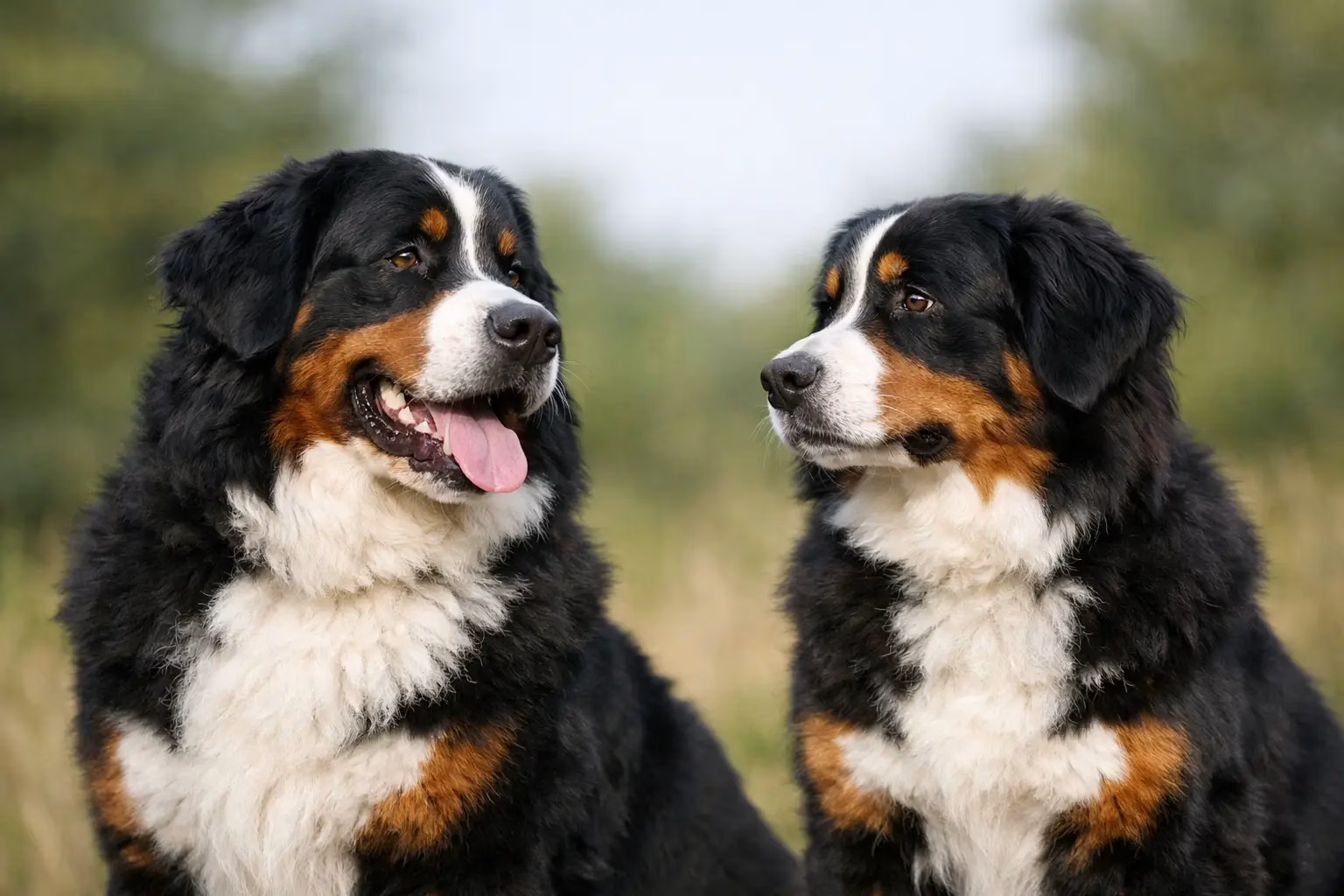
If you have ever met two Bernese Mountain Dogs from the same line and wondered why one feels like a clingy comedian while the other seems more steady and observant, you are not imagining things. Male vs female Bernese temperament is a real consideration for many families, but it is also one of the most misunderstood parts of choosing the right puppy.
With Berners, sex can influence personality trends, but it does not override breeding and genetics, early socialization, training, health, or the overall energy of the household. That matters because many people go into the decision expecting a simple rule – males are sweeter, females are smarter, or one is always easier with kids. Real life is more layered than that.
To date, I have only ever owned female Bernese dogs. My reasoning there was that I did not want to have to deal with “wandering males” when other females were nearby and in heat as quite often we will go camping and take the dogs. Nothing worse than being out west camping; unable to find your male unfixed pup as he’s wandered off with the scent of an in-heat female. The downside to that; is literally the mess that you obviously have to deal with until your female dogs get spayed (I typically waited until 2 years of age before spaying). As far as the dog sex choice Is it right – is it wrong? I will leave that up to you to decide. But for myself in the past; it was the right choice at the time. One day in the future I would LOVE to get a large headed male Bernese though….
Male vs Female Bernese Temperament at a Glance
In broad terms, male Bernese Mountain Dogs often come across as more openly affectionate, slower to mature, and a bit more goofy/aloof well into adulthood. Females are often described as more independent, quicker to pick up routines, and slightly more reserved with their affection, especially with strangers. I never had an issue with affection in my female dogs – early socialization really helps that out.
Those patterns show up often enough that experienced Berner owners notice them, but they are tendencies, not guarantees. You can absolutely meet a female who acts like a giant shadow and a male who is calm, self-possessed, and less emotionally needy. The best way to use sex-based temperament differences is as one piece of the puzzle, not the whole answer. Regardless of which breed you choose, I think you can solve a bit of the temperament issues (slightly reserved, shy, etc) by being for there when they are young. My Indy girl is still shy by nature; but overtime the socialization and interactions helps a ton.
What Male Bernese Are Often Like
Male Berners tend to win people over fast because they wear their hearts on their sleeves. Many are deeply people-oriented and seem happiest when they are physically close to their family. They often lean, follow, flop onto your feet, and look personally offended if a closed bathroom door separates them from their favorite human.
That softness can make males feel especially easy to bond with. For families who want a dog that is openly affectionate and socially warm, a male may feel like the obvious choice. Many owners also feel male Berners are more eager to please in a straightforward way. They may not always be polished, but they often bring a very willing, loving attitude to training and family life.
The trade-off is maturity. Male Bernese often stay puppy-like longer, both emotionally and physically. That can be charming, but it also means they may be slower to develop focus, impulse control, and calm household manners. With a giant breed, extended adolescence is not a small detail. A sweet 95-pound goofball who jumps when excited can still knock over a child or an older adult. I know what that is like with my first female; as my Scarlett bear knocked my grandma over at 11 months old at 95 pounds(sorry Grandma!!!!)
Intact males may also show more marking, roaming interest, or distraction around other dogs, though this depends heavily on management and individual temperament. Neutering decisions, timing, and behavior goals should always be discussed carefully with your vet, especially in a large breed with orthopedic concerns. As stated above, that was something I chose to avoid.
Still deciding on the details? Two other guides cover the questions that come up most often before a Berner comes home: whether to get a male or female Bernese — the temperament differences are real but smaller than most people expect — and what size crate a Bernese actually needs, which is the one purchase people most often get wrong on the first try.
What Female Bernese Are Often Like
Female Berners are often described as a little more serious, especially during the young adult stage. Many seem to mature faster and settle into routines with less drama. They may still be affectionate, deeply loyal, and gentle with children, but their affection can feel a bit more measured.
For some families, that is exactly what they want. A female may come across as more intuitive, more tuned in, and more likely to read the room before acting. Some owners say their females are easier to live with day to day because they are less clownish and less likely to stay in a prolonged adolescent phase.
That said, “easier” depends on the home. A female who is more independent can feel wonderfully balanced to one owner and slightly less cuddly to another. Some females are also more selective socially. That does not mean unfriendly, but they may not greet every person and dog with the same open enthusiasm many males show. My current dog; Indy; is like that a bit. She will bark and scare people off if she does not know them. Now that I am a bit older (mid 30s); I actually prefer that now over my first dog (Scarlett); as I know at least I will have a dog bark when some random person comes by the yard.
If left unspayed, females also bring heat cycles, which add management responsibilities and may influence mood, behavior, and interactions during those periods. Spay timing is another conversation where breed-specific health considerations matter. I chose to spay my dogs at 2. Until then; it was diapers and cleaning the floors daily when they were in heat. Oh the things we do for our dogs!
Temperament Differences That Matter Most in Daily Life
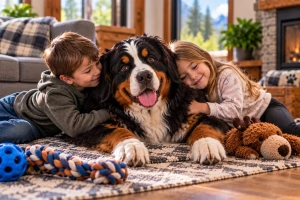
When people compare male vs female Bernese temperament, they are usually trying to predict what daily life will feel like. That is the right question.
In a family with young kids, a male’s easygoing affection may be a wonderful match, but his slower maturity may require more supervision and training around jumping, mouthing, and body awareness- especially with little kids. A female may settle into household rules faster, but if the family expects constant cuddly attention from day one, they may need to appreciate a more understated style of bonding.
For first-time giant-breed owners, the issue is not which sex is better. It is which temperament style fits the household’s tolerance for chaos, neediness, training intensity, and long-term routine. A slightly more independent dog can be easier for some homes. For others, the emotional warmth of a clingy male is exactly why they wanted a Berner in the first place.
Training and Maturity: Where Owners Notice the Difference
Training is one area where owners often report a real difference. Female Berners are frequently said to mature faster and respond to consistency earlier. They may seem more focused in puppy classes and more likely to connect patterns quickly. With that being said; I never had any issue with females, but also cannot comment on training a male.
Males, on the other hand, may act like overgrown puppies longer. That does not mean they are less trainable. In fact, many are extremely trainable. It simply means owners may need more patience with repetition, distraction, and delayed emotional maturity.
This matters because Bernese Mountain Dogs are large, powerful, and sensitive. Harsh training is a poor fit for the breed regardless of sex. I learned that the hard way, with my first dog Scarlett. I had just gotten her, and we were outside to “use the bathroom” (which was my phrase for going potty). It was getting late; we spent about 20 minutes outside and she did NOT go. It was only until we got inside that she peed on the floor. I raised my voice at her – and what did she do – went and POOPED on my carpet. I could not believe it. It was from there on that I realized they usually respond best to calm structure, repetition, praise, and clear expectations. A male may need longer before his brain catches up to his body. A female may understand the lesson faster but decide whether it is worth her effort.
Neither pattern is a flaw. They are just different management experiences.
Affection, Attachment, and Independence
Berners as a breed are famously loving, but they do not all express affection the same way. Male Bernese are often more physically demonstrative. They lean harder, seek more contact, and can seem emotionally transparent. Likely not the breed for someone who desires “personal space”. In my household, there is no personal space with a Berner. They always want to follow you around, and be with you 24/7. Regardless of what gender you bring home, separation anxiety can be a thing for the first 12 months of having a new pup around.
Females are often just as bonded, but they may show it with steadiness instead of constant closeness. A female may lie nearby rather than on top of you. She may check in quietly instead of demanding attention. Many experienced owners find this just as devoted, only less obvious.
If your dream dog is a giant velcro companion, a male may statistically edge closer to that picture. If you want a loyal dog with a little more personal space and composure, a female may feel like a better fit. But again, individual personality can flip those expectations completely.
Size Differences Between Male and Female Bernese
One difference between male and female Berners is more predictable than temperament: size. Male Bernese Mountain Dogs are, on average, taller and heavier than females. The breed-standard height and weight ranges published by the American Kennel Club reflect this, with males sitting toward the upper end of the breed’s range and females toward the lower end. Individual dogs still vary — a female from large lines can certainly outsize a particular male — but as a general trend, a male Berner will often be the bigger dog. For owners, that can matter in practical ways: the size of crate, bed, and vehicle space you will need, and how much dog you are comfortable managing on a leash.
What Matters More Than Sex
The biggest mistake people make is putting too much weight on sex and not enough on the breeder, rescue evaluation, or puppy’s individual temperament. In Bernese Mountain Dogs, early handling, health, social exposure, and the temperament of the parents can shape behavior as much as or more than whether the puppy is male or female. When I chose my 2 pups; I surveyed the pack and did not go for the ones that came to me first. I didn’t choose the ones that were too shy to come see me either. I chose the ones that were a little more aloof; and unsure to come over until the first ones came and saw me; and realized things were okay. It always stuck with me that puppies are easily stolen and that I did not want a dog that was too eager to go to a stranger.
A well-bred male from stable, thoughtful lines may be easier than a poorly bred female from anxious or reactive parents. A female raised with rich early socialization may be more outgoing than a male who missed critical exposure windows. Health also affects temperament more than many people realize. Pain, orthopedic issues, poor sleep, and digestive stress can change behavior in any Berner. Females are also smaller, so there is that too. Mind you; my Reba was darn near a horse and got mistaken 90% of the time for a male; so it is what it is.
That is one reason breed-specific guidance matters so much. At Bernese Mountain Lover, we always come back to the full picture: temperament, structure, health history, and the realities of living with a giant breed that needs both affection and careful management.
So Which Should You Choose?
Choose the dog whose temperament fits your household, not the one that matches a stereotype. If you want an openly affectionate, often sillier companion and you are prepared for a longer adolescent phase, a male may be a beautiful fit. If you want a dog that often matures a bit faster, reads the room well, and may be slightly more self-contained, a female may suit you better.
But if you are choosing between two actual puppies, watch how each one responds to people, novelty, handling, noise, and recovery from mild stress. Ask about the parents. Ask how the litter has been raised. Pay attention to confidence, softness, curiosity, and sociability. I had good luck choosing in the “middle of the pack” for the aforementioned items.
A Bernese Mountain Dog will share your home, your routines, and hold a large piece of your heart forever. Sex can shape the edges of temperament, but the dog in front of you is what really counts. Choose with care, train with patience, and make room for the individual personality that will unfold over time.
However you welcome your Berner – boy or girl – celebrating that bond is part of the joy. Browse our Bernese Mountain Dog gifts for Berner moms, dads, and dog lovers, including mugs, shirts, hoodies, and personalized designs.
Written by Todd Grasse, founder of BerneseMountainLover.com and Bernese Mountain Dog owner, drawing on first-hand experience with the breed.
